 ICE Spotted
ICE Activity in New York 2026: Community Reports and Enforcement Hotspots
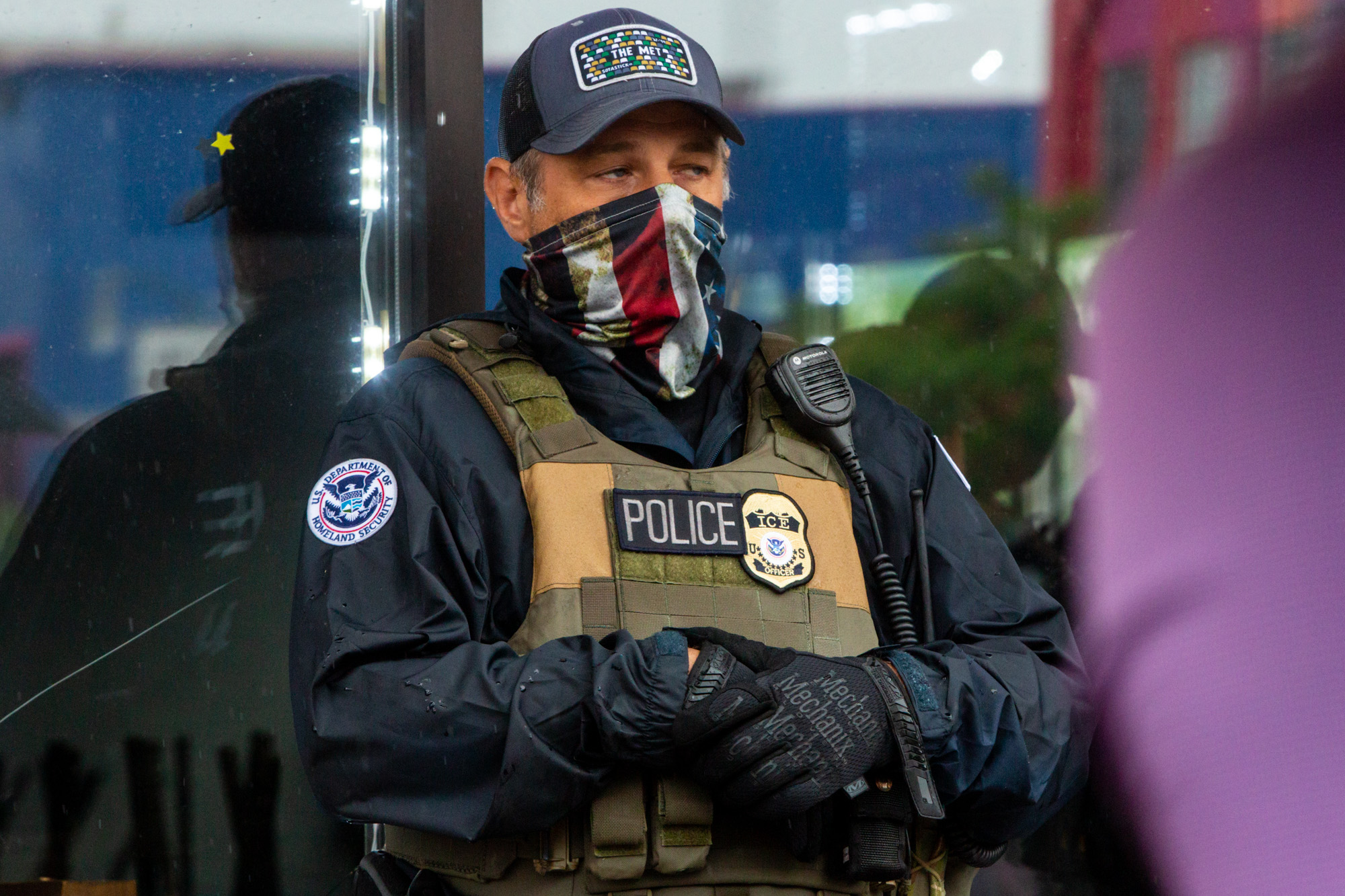
New York State is home to one of the largest and most diverse immigrant populations in the United States. An estimated 4.4 million foreign-born residents live across the state, with the vast majority concentrated in New York City and its surrounding suburbs. New York also has some of the strongest sanctuary protections in the country — city and state policies that limit cooperation between local law enforcement and federal immigration authorities. Yet despite these protections, Immigration and Customs Enforcement (ICE) continues to conduct significant enforcement operations throughout the state.
In 2026, community reports submitted through ICE Spotted paint a picture of an enforcement agency that has adapted to the sanctuary environment by increasing its own operational presence. Without the cooperation of local police or access to city jails, ICE agents in New York have turned to street-level operations, courthouse arrests, early-morning residential raids, and targeted surveillance in immigrant neighborhoods. This article provides a detailed breakdown of where ICE activity is being reported across New York State, how sanctuary protections interact with federal enforcement, and what legal resources are available to communities affected by these operations.
New York City: All Five Boroughs Under Surveillance
New York City generates more ICE sighting reports than any other metro area in the northeastern United States. The city's five boroughs — Manhattan, Brooklyn, Queens, the Bronx, and Staten Island — each present distinct enforcement patterns, but community reports from 2026 make clear that ICE is operating across all of them with a level of intensity that many long-time residents describe as unprecedented.
Queens: Jackson Heights, Corona, and Elmhurst
Queens is the most ethnically diverse urban area in the world, and it is also the borough that generates the highest volume of ICE sighting reports. Jackson Heights, a neighborhood with large Colombian, Ecuadorian, Mexican, and South Asian populations, has been a primary focus of enforcement activity. Community reports describe ICE agents conducting surveillance along Roosevelt Avenue, the neighborhood's commercial spine, and making targeted arrests at residential addresses on the side streets between 74th and 82nd Streets. The Jackson Heights subway stations — particularly the 74th Street-Broadway station serving the 7, E, F, M, and R trains — have been the subject of multiple reports describing agents stationed in or near the station entrances.
In neighboring Corona and Elmhurst, community members report a similar pattern of enforcement. ICE vans have been spotted repeatedly on Junction Boulevard, near the Queens Center Mall, and in the residential blocks surrounding Elmhurst Hospital. Several reports describe agents approaching food cart vendors on Roosevelt Avenue and near the Elmhurst Avenue subway station, a practice that has drawn sharp criticism from immigrant rights organizations.
Queens local cluster: For a tighter neighborhood-level breakdown focused on Jackson Heights, Corona, and Elmhurst, see ICE Activity in Queens 2026.
The Bronx: Courthouse Arrests and Early-Morning Raids
The Bronx has become one of the most contentious battlegrounds in the conflict between New York's sanctuary policies and federal enforcement. Community reports from 2026 describe two primary patterns of ICE activity in the borough: courthouse arrests and early-morning residential raids.
Courthouse arrests — in which ICE agents apprehend individuals as they enter or leave state courthouses for unrelated legal proceedings — have been a source of intense controversy in New York for years. Community reports indicate that agents have been observed near Bronx Criminal Court on East 161st Street, Bronx Family Court, and Bronx Housing Court. In several instances, community members describe individuals being detained by plainclothes agents in the hallways or on the steps of these buildings immediately after attending court hearings for traffic violations, landlord-tenant disputes, or other civil matters.
Courthouse Alert: New York's Office of Court Administration has issued a policy stating that ICE agents should not make arrests inside courthouses without a judicial warrant. However, community reports indicate that agents frequently operate on the sidewalks and steps immediately outside courthouses. If you have a court appearance, consider having an attorney or community advocate accompany you, and be aware of your surroundings when entering and leaving the building.
Read the Bronx courthouse local guide for a narrower rights-and-logistics page focused on court approaches, exits, and sidewalk activity.
Early-morning residential raids in the Bronx have been reported from neighborhoods including Mott Haven, Highbridge, Kingsbridge, and Fordham. Community members describe ICE agents arriving at apartment buildings between 4:00 AM and 6:00 AM, often buzzing multiple apartment intercoms in an attempt to gain entry to buildings. In some reports, agents have been described telling residents through the intercom that they are the police or delivery personnel — a tactic that community advocates say is designed to gain entry without a warrant.
Brooklyn: Sunset Park and Flatbush
Brooklyn's Sunset Park neighborhood, home to one of New York's largest Mexican and Chinese immigrant communities, has generated a steady stream of ICE sighting reports throughout early 2026. Community members describe agents conducting operations along Fifth Avenue, the neighborhood's main commercial corridor, and near the 36th Street subway station. Multiple reports describe unmarked vehicles parked on residential blocks between Fourth and Eighth Avenues, with occupants who appeared to be conducting surveillance.
In Flatbush and East Flatbush, neighborhoods with large Caribbean immigrant populations — particularly from Jamaica, Haiti, Trinidad, and Guyana — community reports describe ICE agents conducting targeted arrests at residential addresses. Several reports from the area around Flatbush Avenue and Church Avenue describe agents arriving in groups and approaching specific apartment units, suggesting pre-planned targeted operations rather than random enforcement.
Manhattan: Immigration Court and Uptown Operations
Manhattan's 26 Federal Plaza, which houses the New York Immigration Court and the local ICE ERO field office, is one of the most-reported locations in the entire ICE Spotted database. Community members regularly report agent activity in and around the building, on the surrounding sidewalks, and at nearby subway stations. While some of this activity is simply the normal presence of federal employees at a federal building, multiple reports describe agents following individuals who leave the building after court hearings and conducting arrests on nearby streets.
Uptown Manhattan, particularly the neighborhoods of Washington Heights, Inwood, and East Harlem, has also been the subject of enforcement reports. Washington Heights and Inwood, home to a large Dominican community, have seen reports of ICE agents conducting operations near the 181st Street and Dyckman Street commercial corridors. In East Harlem, community reports describe agents near the 125th Street subway station and along Third Avenue, an area with significant Mexican and Central American immigrant populations.
NYC Sanctuary Protections: Under Executive Order 41, NYPD officers are prohibited from inquiring about an individual's immigration status and from cooperating with ICE detainer requests except in cases involving individuals convicted of certain violent crimes. The city's Detainer Law further restricts when city agencies can honor ICE detainers. However, these protections only limit local cooperation — they do not prevent federal agents from operating independently within the city.
Long Island: Suffolk County Cooperation and Workplace Raids
Long Island — encompassing Nassau and Suffolk Counties — presents a starkly different enforcement landscape from New York City. While the city's sanctuary policies limit NYPD cooperation with ICE, Suffolk County has historically maintained a far more cooperative relationship with federal immigration authorities. The Suffolk County Sheriff's Office has participated in ICE's 287(g) program, which deputizes local officers to perform certain immigration enforcement functions, and community reports suggest that this cooperation translates into more aggressive and more frequent enforcement activity.
Community reports from Suffolk County in 2026 describe ICE agents conducting workplace raids at landscaping companies, construction sites, and food processing facilities in towns including Brentwood, Central Islip, Patchogue, and Riverhead. The North Fork of Long Island, which relies heavily on immigrant agricultural labor for its vineyards and farms, has also been the subject of reports describing agents approaching workers at farm labor sites. Several reports from Riverhead describe agents stationed near the Suffolk County District Court, conducting surveillance of individuals entering and leaving the courthouse.
Nassau County, while generally less aggressive than Suffolk in its cooperation with ICE, has also generated enforcement reports. Community members in Hempstead, Freeport, and Glen Cove — towns with significant Central American and Caribbean populations — describe ICE vehicle sightings and targeted residential operations. In Hempstead, reports describe agents near the Long Island Rail Road station and in the parking lot of a shopping center on Fulton Avenue that serves as an informal day labor gathering site.
Read the Long Island local guide for a narrower page focused on Suffolk worksite raids, Nassau labor mobility, and agricultural-labor reporting patterns.
Long Island Alert: Community organizations on Long Island report that ICE agents have been conducting operations near schools during morning drop-off hours in several Suffolk County communities. If you witness enforcement activity near a school, document it immediately and report it through ICE Spotted. Federal policy designates schools as sensitive locations where enforcement actions should generally not occur.
Hudson Valley: A Growing Enforcement Presence
The Hudson Valley region — stretching north from the New York City suburbs through Westchester, Rockland, Orange, Dutchess, and Ulster Counties — has seen a notable increase in ICE activity reports in 2026. Communities in this region are increasingly affected by enforcement operations that appear to target both long-term residents and more recent arrivals who have settled in smaller cities and towns throughout the valley.
In Westchester County, reports from White Plains, Mount Kisco, and Port Chester describe agents conducting operations near commercial districts and at apartment complexes. Mount Kisco, a small village with a significant Guatemalan population, has been the subject of multiple reports describing agents stationed near the village's downtown area and approaching workers at landscaping company staging areas. In Rockland County, community reports from Spring Valley — a town with diverse immigrant communities including Haitian, Central American, and Orthodox Jewish populations — describe ICE vehicle sightings and targeted enforcement operations.
Further up the valley, the city of Newburgh in Orange County has generated a growing number of reports. Newburgh's downtown area, where a large share of the city's immigrant population is concentrated, has seen reports of ICE agents conducting operations near bodegas, laundromats, and the Newburgh bus terminal. Community advocates in the area describe an enforcement posture that has become more visible and more aggressive since late 2025.
Buffalo, Rochester, and the Canadian Border Region
Upstate New York's western cities — Buffalo and Rochester — occupy a unique enforcement position due to their proximity to the Canadian border. Both cities are within the 100-mile border zone where Border Patrol has expanded authority, and community reports indicate that ICE and CBP operate in close coordination in this region.
In Buffalo, community reports describe checkpoint-style operations on the Peace Bridge approach and along the I-190 corridor. The city's West Side, which has welcomed significant refugee and immigrant populations from Myanmar, Somalia, and Central America, has seen reports of ICE agents conducting operations near the International Institute of Buffalo and in the residential neighborhoods along Grant Street and Niagara Street. Several reports describe agents questioning individuals at bus stops along the NFTA Metro system.
Rochester, while further from the border than Buffalo, has also generated enforcement reports in 2026. Community members in the North Clinton Avenue corridor and the city's northeast neighborhoods describe ICE vehicle sightings and what appear to be surveillance operations near apartment complexes housing refugee families. The Rochester area's significant Puerto Rican population — who are U.S. citizens — has expressed concern about racial profiling in the context of increased enforcement, as agents conducting operations in mixed-status neighborhoods may approach individuals based on perceived ethnicity rather than specific intelligence.
New York State Sanctuary Protections: The Strongest in the Nation
New York has arguably the strongest collection of sanctuary protections of any state in the country. These protections operate at multiple levels — city, county, and state — creating a layered defense that limits how local agencies interact with federal immigration authorities.
At the city level, New York City's Executive Order 41 (originally issued in 1989 and strengthened multiple times since) restricts NYPD officers from inquiring about immigration status or cooperating with ICE operations. The city's Detainer Law limits when city agencies can honor ICE detainer requests, and the city has refused to provide ICE with access to individuals detained in city jails except in cases involving individuals convicted of specific violent felonies.
At the state level, New York has enacted several measures to protect immigrants. The state's Green Light Law, passed in 2019, allows undocumented immigrants to obtain driver's licenses and prohibits the Department of Motor Vehicles from sharing records with ICE without a court order. The New York State Liberty Act proposals, which have been the subject of ongoing legislative debate, would create a statewide sanctuary framework similar to California's SB 54, limiting cooperation between all state and local law enforcement agencies and ICE.
However, it is critical for New York residents to understand the limits of sanctuary protections. These policies limit local cooperation with ICE — they do not prevent federal agents from operating independently. ICE agents have full legal authority to conduct enforcement operations anywhere in New York State, and they do not need the permission, cooperation, or even notification of local authorities to do so. The increased frequency of street-level operations, courthouse arrests, and residential raids in 2026 community reports reflects ICE's adaptation to an environment where the traditional pathway of cooperation through local jails has been largely cut off.
How to Report ICE Sightings in New York
If you witness ICE enforcement activity anywhere in New York State, submitting a timely report helps your community stay informed and prepared. When documenting a sighting, include as much detail as possible:
- Location: Borough or city, cross streets, subway station, or nearby landmarks. In NYC, include the neighborhood name if possible.
- Time: When you observed the activity, including whether agents appeared to be arriving, actively conducting an operation, or departing.
- Vehicles: Number, type (van, SUV, sedan), color, and whether they had government plates, visible markings, or appeared completely unmarked.
- Agents: Number of agents visible, what they were wearing (tactical gear, plainclothes with badges, vests with markings), and what they appeared to be doing.
- Courthouse activity: If you observe agents near a courthouse, note the specific courthouse, what entrance they were near, and whether they appeared to be targeting specific individuals.
You can submit a report using the anonymous form below or through the ICE Spotted homepage. All reports are anonymous — no IP address, name, or identifying information is collected.
Legal Resources for New York Residents
New York offers extensive legal resources for immigrants facing enforcement actions. Key organizations include:
- Make the Road New York: One of the largest immigrant advocacy organizations in the state, operating community centers in Jackson Heights, Bushwick, Brentwood (Long Island), Staten Island, and White Plains. Make the Road provides legal services, know-your-rights training, rapid response coordination, and community organizing.
- New York Immigration Coalition (NYIC): A statewide umbrella organization that coordinates more than 200 member organizations and operates a rapid response network for ICE enforcement activity. NYIC's hotline provides real-time guidance and attorney referrals.
- Legal Aid Society: New York City's largest provider of free legal services, the Legal Aid Society operates an immigration law unit that provides representation to detained individuals, assists with asylum applications, and responds to ICE enforcement actions.
- Catholic Charities of the Archdiocese of New York: Provides immigration legal services through offices in Manhattan, the Bronx, and the Hudson Valley, offering consultations, application assistance, and representation in immigration proceedings.
- The Door: Provides legal services specifically for immigrant youth and young adults ages 12-24 in New York City.
- ActionNYC: A city-funded program that provides free immigration legal screenings and legal help at community-based organizations, libraries, and schools across all five boroughs.
Read the Queens-specific local guide for a tighter neighborhood view of Jackson Heights, Corona, and Elmhurst reporting patterns.
Remember: In New York, you have strong constitutional and state-level protections. You have the right to remain silent. You have the right to refuse to open your door without a judicial warrant signed by a federal judge. You have the right to record interactions with law enforcement in public spaces. If ICE agents come to your door, you can ask them to slide any warrant under the door so you can verify it is signed by a judge — not just an ICE administrative warrant, which does not give agents the legal authority to enter your home.
ICE Activity Map: New York Reports
The map below shows recent community-reported ICE activity across New York State. Red markers indicate reported sightings, courthouse operations, and enforcement actions in NYC, Long Island, and upstate regions.