 ICE Spotted
Documenting ICE Encounters: Your Legal Right to Record and Report in 2026
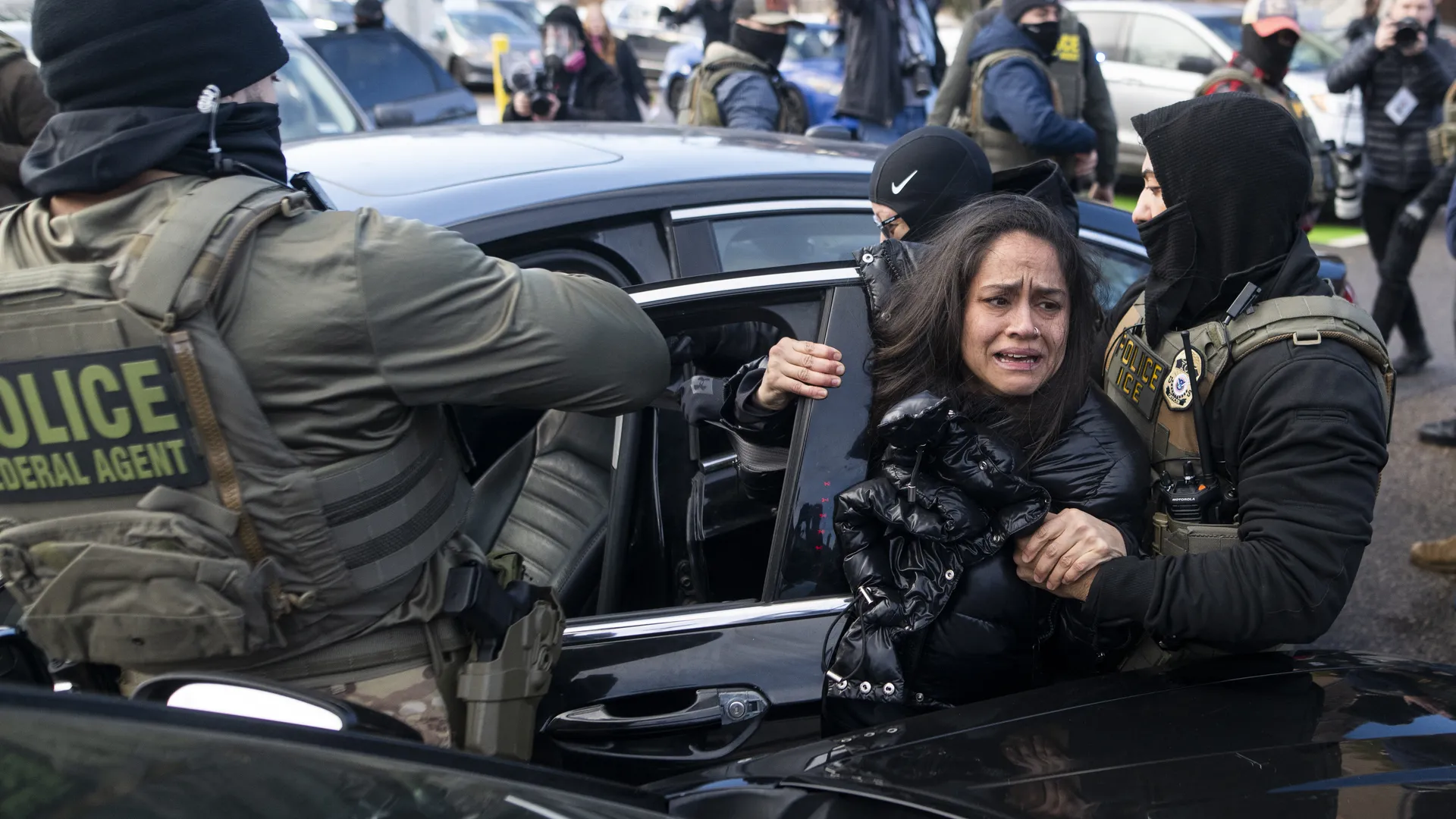
In 2026, as Immigration and Customs Enforcement (ICE) operations continue across the United States, one of the most powerful tools available to community members is a smartphone camera. Recording and documenting ICE encounters is not just helpful for community awareness — it is a constitutionally protected right. Video and photographic evidence of immigration enforcement operations has played a decisive role in court cases, policy changes, and public accountability efforts. This guide explains the legal foundations of your right to record, provides practical advice on how to safely document ICE activity, and outlines the best practices for preserving and sharing footage in 2026.
The First Amendment Right to Record
The right to record law enforcement officers performing their duties in public spaces is protected by the First Amendment to the United States Constitution. Federal courts across the country have consistently held that the act of recording police and federal agents in public is a form of protected speech and press activity. This right applies to every person in the United States, regardless of immigration status, citizenship, or whether they are a credentialed journalist.
The landmark legal precedent for recording law enforcement was established through a series of federal circuit court decisions. The First Circuit Court of Appeals ruled in Glik v. Cunniffe (2011) that recording police officers in the performance of their duties in a public space is a clearly established right. The Third, Fifth, Seventh, Ninth, and Eleventh Circuits have issued similar rulings. In 2025, the Supreme Court declined to hear a challenge to these lower court rulings, effectively allowing the circuit court decisions to stand as controlling law in their jurisdictions.
This right extends specifically to recording ICE agents and other federal law enforcement officers. DHS's own policies acknowledge the public's right to observe and record federal law enforcement activities in public spaces. ICE agents are trained that they cannot order bystanders to stop recording, cannot seize recording devices without a warrant, and cannot delete footage from a bystander's device.
Key legal principle: You have the right to record any law enforcement activity that is visible from a public space — sidewalks, streets, parks, parking lots, and any other area where you have a legal right to be. This applies to ICE operations, traffic stops, checkpoints, and arrests occurring in view of the public.
What You Can Legally Record
Understanding the scope of your recording rights helps you document ICE encounters confidently and without unnecessary risk. In general, you can record anything that is plainly visible from a public space. This includes:
- Agents in public: ICE agents conducting operations on public streets, sidewalks, in parking lots, at transit stations, or near courthouses can be recorded from any public vantage point.
- Vehicle operations: ICE vehicles, including unmarked SUVs and vans, can be photographed and filmed, including their license plates, any visible markings, and the agents entering or exiting them.
- Arrests and detentions: If ICE agents are detaining or arresting someone in a public space, you can record the encounter. This includes filming the use of force, the treatment of detained individuals, and whether agents identify themselves.
- Checkpoints: ICE checkpoints on public roads are in public view and can be recorded. Filming checkpoint operations, including the questions agents ask and how they conduct vehicle searches, is protected activity.
- Raids and operations at businesses: If ICE conducts a workplace raid or operation at a business that is visible from a public area, you can record from outside the premises.
Limitations on Recording
While your right to record is broad, there are some important limitations. You cannot enter private property without permission to record. You cannot physically interfere with an ongoing law enforcement operation — this means you must maintain a reasonable distance and cannot block agents from performing their duties. You also cannot record in areas where recording is generally prohibited, such as inside certain federal buildings or courtrooms, though the areas immediately outside these buildings are public spaces where recording is permitted.
How to Safely Document ICE Encounters
Knowing your rights is essential, but knowing how to exercise them safely is equally important. The following practical guidelines will help you document ICE activity effectively while minimizing personal risk.
Phone Recording Best Practices
- Start recording immediately: When you observe what appears to be ICE activity, begin recording as soon as possible. Critical moments — agents arriving, identifying themselves, making contact with individuals — happen quickly and cannot be recaptured later.
- Use landscape mode: Hold your phone horizontally to capture a wider field of view. This makes it easier to capture vehicle license plates, agent badge numbers, vest markings, and the overall scene simultaneously.
- Narrate what you see: While recording, verbally describe what you are observing. State the date, time, location, number of agents, vehicle descriptions, and any markings you can see. Audio narration provides crucial context that may not be visible in the video, especially in low-light conditions.
- Capture identifying details: Focus on agent patches (DHS, ICE, ERO, HSI markings), vest text (POLICE, FEDERAL AGENT), badge numbers, vehicle license plates, and vehicle types. These details are essential for accurate reports and potential legal proceedings.
- Maintain a safe distance: Stay far enough away that you do not interfere with the operation, but close enough that your camera can capture useful detail. A distance of 15 to 30 feet from the nearest agent is generally considered reasonable, though there is no legally defined minimum distance.
- Stay on public property: Position yourself on a public sidewalk, street, or other public area. Do not enter private property, cross police tape, or enter an area that agents have cordoned off.
- Use live streaming if possible: Several apps allow you to live-stream video directly to the cloud or to social media as you record. This ensures that even if your device is seized or damaged, the footage is preserved remotely. The ACLU's Mobile Justice app is specifically designed for recording police encounters and automatically uploads footage.
Safety first: Never put yourself in physical danger to record. If agents direct you to move for safety reasons related to an active tactical situation, comply with the instruction and continue recording from the new position. Your safety is more important than any footage.
What to Do If Agents Tell You to Stop Recording
Despite the clear legal protections, some ICE agents may order you to stop recording, attempt to block your camera, or threaten you with arrest. Understanding how to respond in these situations is critical.
If an agent tells you to stop recording, you can calmly and politely state: "I am exercising my First Amendment right to record in a public space. I am not interfering with your operation." You do not need to stop recording. Continue filming from a safe distance. The agent's instruction to stop recording is not a lawful order, and courts have consistently ruled that recording law enforcement in public is protected activity.
If an agent physically approaches you or attempts to take your phone, do not resist physically. State clearly: "I do not consent to the seizure of my device. I am recording in a public space." If the agent takes your phone, do not fight to get it back. Note the agent's badge number, name if provided, and the time of the seizure. This information will be essential for filing a complaint and potentially recovering your device and footage.
Agents cannot legally delete your footage without a court order. If an agent deletes footage from your device, this may constitute destruction of evidence and a violation of your civil rights. Document this immediately and contact an attorney. In many cases, deleted footage can be recovered through forensic analysis of the device.
Preserving Your Footage
Recording an ICE encounter is only valuable if the footage is preserved and accessible. Digital evidence can be lost through device damage, seizure, accidental deletion, or data corruption. Follow these steps to protect your recordings.
Immediate Backup
As soon as you finish recording, back up the footage to a cloud storage service — Google Drive, iCloud, Dropbox, or a similar platform. If you used a live-streaming app, the footage is already backed up remotely. Do not rely solely on your phone's local storage. If your phone is seized, lost, or damaged, local-only footage will be lost.
Preserve Original Files
Do not edit, crop, or alter the original recording. Edited footage can be challenged in legal proceedings as potentially manipulated. Keep the original, unedited file with its original metadata intact. The metadata embedded in the video file — including the date, time, GPS coordinates, and device information — provides critical authentication that can verify the footage's authenticity in court.
Share Strategically
If you choose to share your footage publicly, consider the privacy implications for the individuals being detained. Blurring the faces of detained individuals before public posting can protect their privacy and prevent retaliation against them or their families. However, always preserve an unblurred original for potential legal use. When sharing footage with attorneys, legal organizations, or law enforcement oversight bodies, provide the unedited original.
Reporting Platforms and Organizations
Beyond recording, reporting ICE activity through established platforms amplifies the impact of your documentation and helps communities stay informed. Several platforms and organizations accept reports of ICE activity.
ICE Spotted provides a real-time anonymous reporting system and activity map. No login is required, and no personal data is collected. Reports submitted through ICE Spotted contribute to a community-sourced picture of enforcement activity across the country.
The ACLU accepts reports of civil rights violations during immigration enforcement through its various state chapters. If you witness agents violating someone's rights — refusing to identify themselves, entering a home without a warrant, using excessive force, or seizing recording devices — the ACLU can provide legal assistance and pursue accountability.
United We Dream operates a community reporting hotline and network that shares verified ICE activity reports with immigrant communities. Their MigraWatch platform allows community members to share real-time alerts about enforcement activity in their area.
Local immigrant rights organizations in most major cities operate rapid response networks that deploy trained observers when ICE activity is reported. These observers serve as witnesses and can provide immediate legal support to individuals targeted by enforcement operations.
Legal Precedents That Protect Your Right to Record
Understanding the legal cases that established your recording rights strengthens your ability to assert those rights in the moment. Several key court decisions form the foundation of the right to record law enforcement in 2026.
In Glik v. Cunniffe (1st Circuit, 2011), the court held that "the filming of government officials engaged in their duties in a public place, including police officers performing their responsibilities, fits comfortably within" First Amendment protections. In Turner v. Lieutenant Driver (5th Circuit, 2017), the court ruled that the First Amendment protects the right to record police activity, noting that "filming the police contributes to the public's ability to hold the police accountable." The Seventh Circuit in ACLU of Illinois v. Alvarez (2012) struck down an eavesdropping law that had been used to prosecute people for recording police, ruling that audio recording of law enforcement in public is protected speech.
These precedents apply with equal force to federal law enforcement officers, including ICE agents. Federal courts have not drawn a distinction between recording local police and recording federal agents — the First Amendment protection applies to recording all government officials performing their duties in public spaces.
What Not to Do While Recording
While your right to record is robust, certain actions can expose you to legal risk or physical danger. Avoid the following:
- Do not physically interfere: You cannot step between agents and the person they are detaining, block a vehicle, or physically obstruct an operation. Interference can result in arrest for obstruction of justice, a federal criminal charge.
- Do not provide false information: If agents ask you a question, you have the right to remain silent. However, providing false information to a federal agent is a crime under 18 U.S.C. 1001. Either remain silent or answer truthfully.
- Do not trespass: Stay on public property. Entering private property, jumping fences, or entering restricted areas to get a better recording angle can result in trespassing charges.
- Do not incite others: While you can inform bystanders of their rights, do not encourage others to interfere with law enforcement operations. Incitement to obstruction can itself be a criminal offense.
- Do not ignore lawful safety instructions: If agents are establishing a perimeter for genuine safety reasons — such as a tactical operation where weapons may be drawn — comply with instructions to move to a safe distance. You can continue recording from the new position.
Report ICE Activity Anonymously
If you have witnessed or recorded ICE activity in your community, submitting a report helps everyone stay informed. Use the map below to view recent community-reported sightings, and use the anonymous report form to share what you observed.