 ICE Spotted
ICE Traffic Stops Near You: Your Rights and What to Expect in 2026
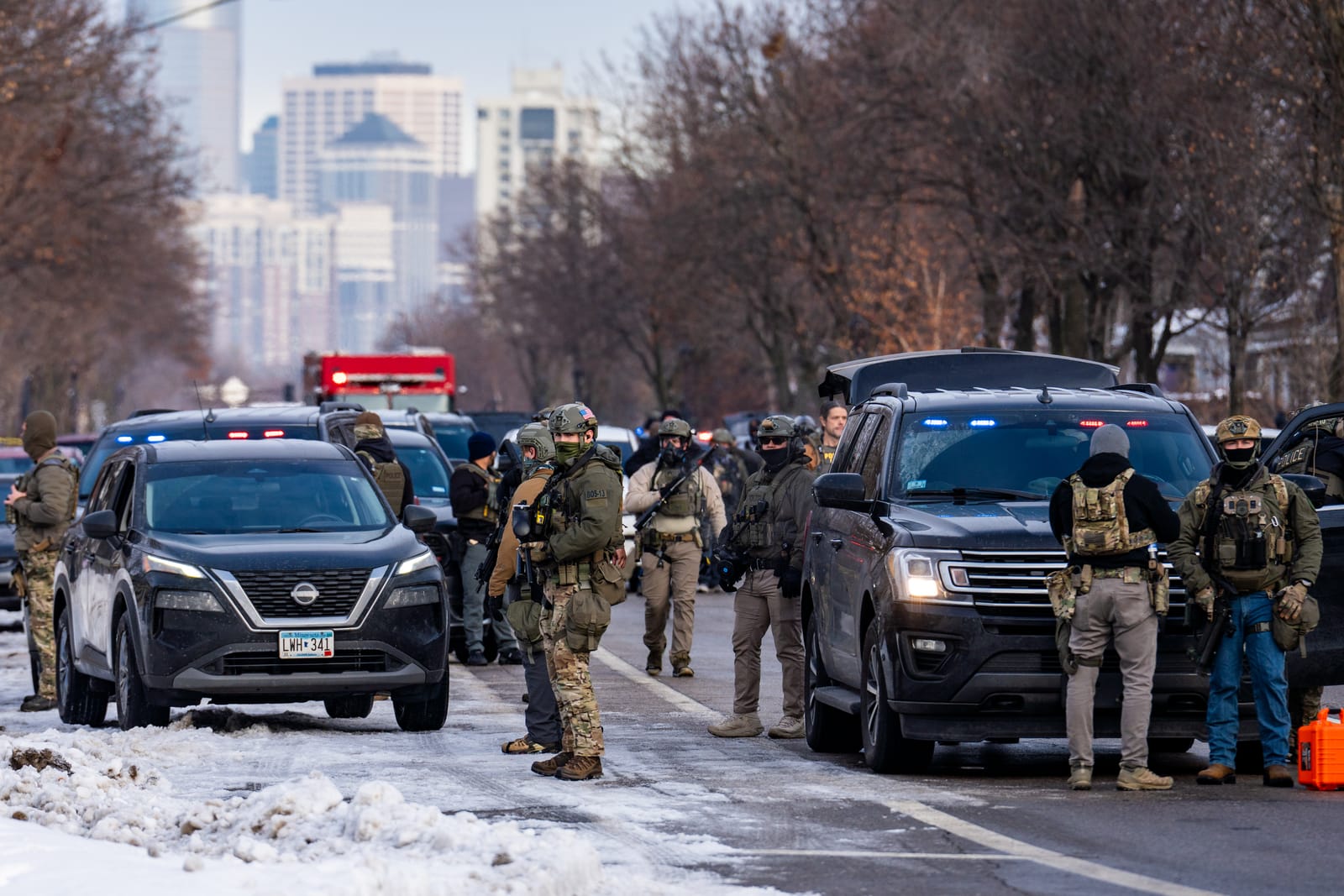
Being pulled over by law enforcement is stressful under any circumstances, but an encounter with Immigration and Customs Enforcement (ICE) agents during a traffic stop raises unique legal questions and heightened anxiety for drivers and passengers alike. In 2026, community reports of ICE-initiated traffic stops have increased significantly across the United States, with stops being documented in major cities, suburban neighborhoods, and rural highways. This guide explains how ICE traffic stops differ from ordinary police stops, what your constitutional rights are during such an encounter, what you should and should not say, whether agents can legally search your vehicle, how to document the stop, and what to do if you or a passenger is detained.
How ICE Traffic Stops Differ from Regular Police Stops
When a local police officer pulls you over, the encounter is governed by state traffic laws and the Fourth Amendment's protections against unreasonable searches and seizures. The officer typically needs reasonable suspicion that you committed a traffic violation or other offense. An ICE traffic stop operates under a different legal framework, and understanding these differences is critical to protecting your rights.
Legal Authority
ICE agents derive their authority from federal immigration law, specifically the Immigration and Nationality Act (INA), rather than state traffic codes. ICE agents do not have general traffic enforcement authority. They cannot pull you over simply because you were speeding or ran a stop sign. Instead, ICE agents conducting a traffic stop must have either reasonable suspicion that an immigration violation has occurred or be operating as part of a broader enforcement action such as a checkpoint or targeted operation. In practice, however, ICE agents sometimes conduct stops in coordination with local police or use pretextual traffic violations to initiate contact with a vehicle's occupants.
Identification and Warrants
Unlike local police officers who wear clearly identifiable uniforms and drive marked patrol cars, ICE agents conducting traffic stops may be in unmarked vehicles and wearing a range of attire from full tactical gear to civilian clothing with a badge displayed on a lanyard or belt. This inconsistency in appearance is one of the most common sources of confusion during ICE traffic stops. Community reports indicate that in some cases, drivers were unsure whether they were being stopped by legitimate law enforcement or by someone impersonating an officer.
Always ask for identification. You have the right to ask any law enforcement officer to identify themselves and show credentials. ICE agents carry a badge and a credential card issued by the Department of Homeland Security. If the agent is in an unmarked vehicle, you can ask them to call a marked unit to the scene before you exit your vehicle.
Your Constitutional Rights During an ICE Traffic Stop
Regardless of your immigration status, the U.S. Constitution provides protections that apply to every person on American soil during a law enforcement encounter. The following rights are fundamental to any ICE traffic stop situation.
The Right to Remain Silent
The Fifth Amendment protects your right against self-incrimination. During an ICE traffic stop, you are not required to answer questions about your immigration status, country of birth, how long you have been in the United States, or where you are traveling. You can clearly state: "I am exercising my right to remain silent." You should provide your driver's license, vehicle registration, and proof of insurance if asked, as these are required under state traffic law. However, you are not obligated to answer any other questions.
It is important to understand that remaining silent cannot legally be used as evidence against you or as the basis for an arrest. Agents may attempt to continue questioning you or suggest that cooperation will make the process easier, but you are under no obligation to respond. Stay calm, be polite, and repeat your invocation of your right to remain silent if necessary.
The Right to Refuse a Vehicle Search
The Fourth Amendment protects you against unreasonable searches. ICE agents cannot search your vehicle without one of the following: your explicit consent, probable cause to believe that the vehicle contains evidence of a crime, or a valid search warrant. If an agent asks to search your vehicle, you should clearly state: "I do not consent to a search." Say this calmly and clearly, and repeat it if necessary.
If agents search your vehicle despite your refusal, do not physically resist. Instead, verbally reiterate that you do not consent to the search and make a mental note of everything that happens. This information will be important if the legality of the search is later challenged in court. Any evidence obtained through an unlawful search may be suppressed under the exclusionary rule.
The Right to Record the Encounter
Federal courts have consistently held that you have a First Amendment right to record police activity in public, and this includes ICE traffic stops. You can use your phone to record audio and video of the encounter. Inform the agent that you are recording. In most jurisdictions, you do not need the agent's permission to record. However, do not hold the phone in a way that could be interpreted as threatening, and do not exit your vehicle to record unless instructed to do so by the agent.
Consider keeping a dashboard camera in your vehicle that automatically records whenever the car is running. This provides an objective record of the entire encounter that starts before the agent approaches your window.
Critical: Do not hand your phone to an ICE agent. Agents cannot search your phone without a warrant, as established by the Supreme Court in Riley v. California (2014). If an agent asks to see your phone, politely decline and state: "I do not consent to a search of my phone."
What to Say and What Not to Say
The words you use during an ICE traffic stop matter. What you say can be used against you in immigration proceedings, and certain statements can inadvertently waive your rights or provide agents with information they can use to expand the scope of the stop.
Statements You Should Make
- "Am I free to go?" This is one of the most important questions you can ask. It forces the agent to clarify whether you are being detained or whether the encounter is voluntary. If the agent says you are free to go, leave calmly and immediately.
- "I am exercising my right to remain silent." This clearly invokes your Fifth Amendment right and puts agents on notice that you will not be answering questions.
- "I do not consent to a search." This preserves your Fourth Amendment rights and creates a record that any search conducted without your consent was not voluntary.
- "I want to speak with an attorney." If you are being detained, this invokes your Sixth Amendment right to counsel. Agents should stop questioning you after this request.
Statements You Should Avoid
- Do not volunteer information about your immigration status. Statements like "I'm here legally" or "I have papers" can open the door to further questioning about the specifics of your status.
- Do not lie. Providing false information to a federal agent is a crime. It is always better to remain silent than to make a false statement.
- Do not sign anything. Agents may present documents for your signature during a traffic stop. Do not sign anything without first consulting with an attorney. Signing certain documents can waive your rights to a hearing before an immigration judge.
- Do not discuss your country of origin. Even casual conversation about where you are from can be used as evidence in immigration proceedings.
Can ICE Agents Pull You Over Without a Reason?
No. Like all law enforcement officers, ICE agents must have a legal basis to stop your vehicle. Within the 100-mile border zone -- which encompasses roughly two-thirds of the U.S. population -- agents have claimed broader authority to conduct stops, but federal courts have placed limits on this authority. Outside the border zone, ICE agents must have reasonable suspicion that an immigration violation or other federal crime has occurred in order to initiate a traffic stop.
In practice, ICE agents sometimes conduct traffic stops in coordination with local law enforcement. In these joint operations, a local officer may initiate the stop based on a traffic violation while ICE agents are present or nearby to question the vehicle's occupants about their immigration status. This practice has been challenged in court, with civil rights organizations arguing that it amounts to a pretextual stop designed to circumvent Fourth Amendment protections.
How to Document an ICE Traffic Stop
Thorough documentation of an ICE traffic stop is essential, whether you are the driver, a passenger, or a bystander who witnesses the stop. Documentation serves two purposes: it creates a record that can be used in legal proceedings if your rights were violated, and it contributes to community awareness of ICE enforcement patterns.
- Record video and audio using your phone or dashcam. Capture the agent's face, badge number, vehicle make and license plate, and any other identifying information.
- Note the exact time, date, and location of the stop. Include cross streets, landmarks, and the direction you were traveling.
- Count the number of agents and vehicles involved. Note whether vehicles were marked or unmarked and whether agents were in uniform or plainclothes.
- Write down what was said as soon as possible after the encounter while the conversation is fresh in your memory. Include direct quotes if you can remember them.
- Identify witnesses. If there were passengers in your vehicle or bystanders who observed the stop, obtain their contact information if possible.
- Submit an anonymous report through ICE Spotted using the form below. Your report helps map ICE traffic stop activity and alerts other community members to enforcement patterns in your area.
What to Do If You or a Passenger Is Detained
If an ICE agent detains you or a passenger during a traffic stop, remain calm and do not physically resist. Physical resistance can result in criminal charges and does not prevent detention. Instead, clearly state that you are exercising your right to remain silent and that you want to speak with an attorney. Memorize the phone number of an immigration attorney or legal aid organization, or keep it saved in your phone.
If you are not detained but a passenger is, document everything you can and immediately contact an immigration attorney or legal aid organization on the detained person's behalf. Note which agency transported the detained individual and in which direction they traveled, as this information can help locate the person in the federal detention system. Organizations such as the National Immigration Law Center, the ACLU, and local legal aid societies can help locate detained individuals and provide legal representation.
Emergency preparation: Keep an emergency card in your wallet or vehicle glove compartment that includes your attorney's phone number, your emergency contact information, and a statement that reads: "I am exercising my right to remain silent. I do not consent to a search. I want to speak to my attorney." Having this card available can help you remember your rights during a stressful encounter.
Where ICE Traffic Stops Are Being Reported in 2026
Community reports submitted to ICE Spotted reveal that ICE traffic stops are occurring with increased frequency in cities across the country. The highest concentrations of reported stops have been in Los Angeles, Houston, Dallas, Chicago, Phoenix, Atlanta, Miami, and New York. However, stops have also been reported in smaller cities and suburban areas that have not historically seen significant ICE enforcement activity. Highway stops near immigration court buildings and transit hubs are particularly common. The map below shows recent community-reported ICE activity, including traffic stops, across the United States.