 ICE Spotted
ICE Activity in Florida 2026: Community Reports and Enforcement Hotspots
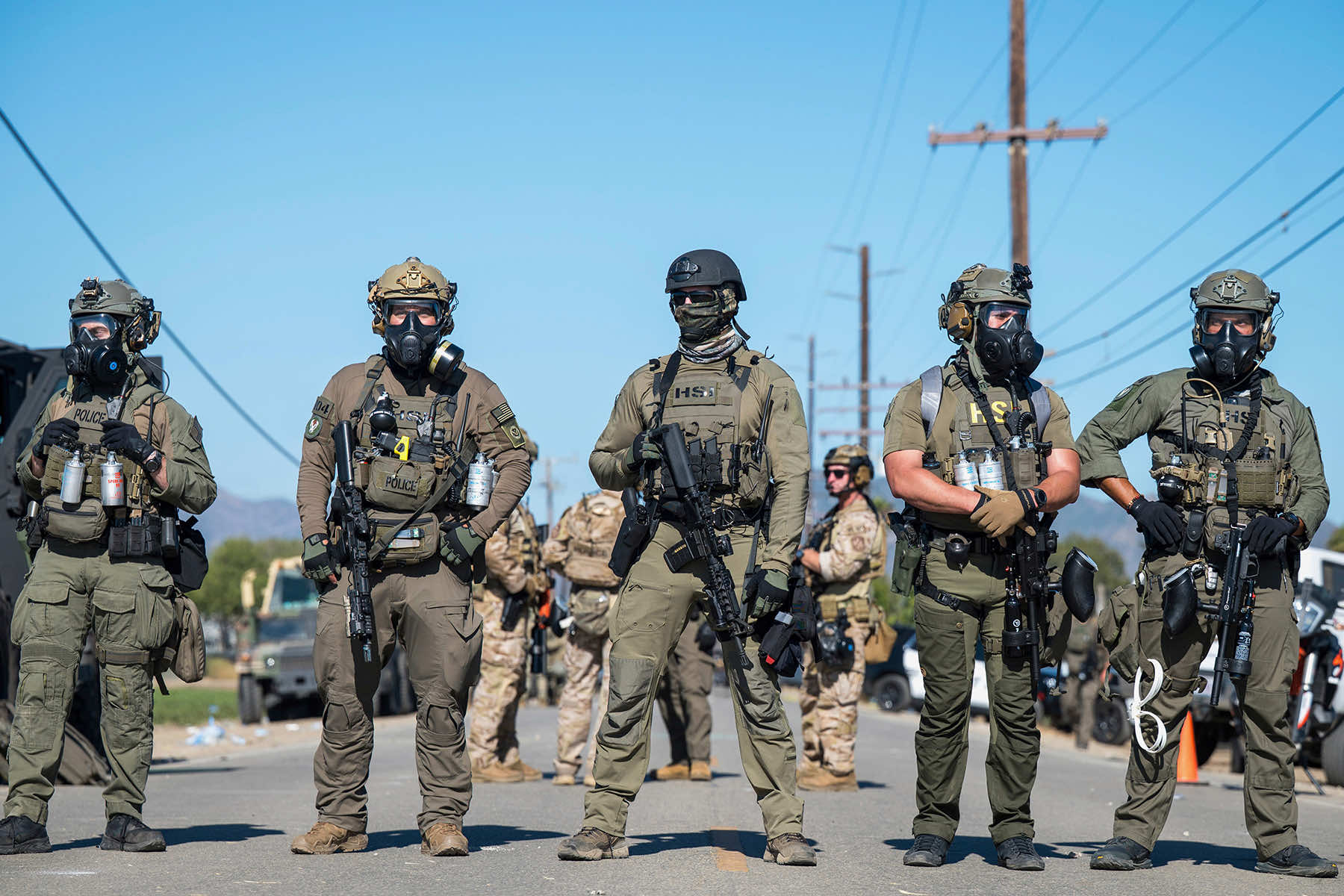
Florida has emerged as one of the most aggressive states in the country when it comes to immigration enforcement cooperation. With an estimated 775,000 undocumented immigrants — the third-largest population in any U.S. state — and a state government that has positioned itself as a national leader in anti-immigration policy, Florida presents a uniquely challenging environment for immigrant communities. In 2026, community reports submitted through ICE Spotted reveal that enforcement activity has intensified dramatically across the state, from the dense urban neighborhoods of Miami-Dade County to the agricultural communities of Central Florida and the growing suburbs of Jacksonville.
This article provides a comprehensive, region-by-region breakdown of where ICE operations are being reported in Florida, the state laws and policies that shape the enforcement landscape, and what legal resources are available to communities facing these operations. Whether you live in South Florida, the I-4 corridor, or the Panhandle, understanding the current enforcement picture is essential for community safety and preparedness.
Miami-Dade County: The Epicenter of Florida Enforcement
Miami-Dade County generates the highest volume of ICE sighting reports in Florida by a significant margin. The county's enormous and diverse immigrant population — including large communities from Cuba, Haiti, Honduras, Nicaragua, Venezuela, Colombia, and Brazil — makes it a primary focus of federal enforcement operations. Community reports from early 2026 describe a wide range of enforcement activity across the county, with particular concentrations in several key areas.
Little Havana, the iconic neighborhood along Calle Ocho (SW 8th Street), has seen multiple reports of ICE agents conducting targeted operations at residential addresses. While the neighborhood's historically Cuban population has generally enjoyed a more favorable immigration status than other groups, community members report that recent operations appear to target newer arrivals from Central America and Venezuela who have settled in the area. In Hialeah — a city of nearly 240,000 that is 96% Hispanic — community reports describe ICE vans conducting regular patrols through residential streets, with agents observed in the parking lots of shopping centers along West 49th Street and Palm Avenue.
Homestead, in southern Miami-Dade County, occupies a particularly sensitive position. The city is home to the Homestead Temporary Shelter, a controversial facility that has been used to house unaccompanied migrant children, and it is close to the Krome Service Processing Center, one of ICE's primary detention facilities in the Southeast. Community reports from Homestead describe a constant ICE and CBP vehicle presence in the area, with agents frequently seen in the parking lots of grocery stores, gas stations, and the Homestead bus terminal along U.S. Route 1.
Community Alert: Multiple community organizations in Miami-Dade County report that ICE agents have been conducting surveillance outside immigration legal service offices in downtown Miami and near the immigration court on North Miami Avenue. If you have an appointment with an immigration attorney or at the court, consider having someone accompany you and document any suspicious vehicle presence nearby.
The Krome Service Processing Center, located in western Miami-Dade County near the Everglades, is the largest ICE detention facility in South Florida. Community reports describe significant enforcement vehicle traffic on Krome Avenue and SW 8th Street leading to and from the facility. Family members attempting to visit detained relatives have reported being questioned by agents in the facility parking lot, a practice that immigration attorneys in the area have condemned as intimidation.
Orlando and Central Florida: The I-4 Corridor
The Interstate 4 corridor — stretching from Tampa through Orlando to Daytona Beach — is home to one of the fastest-growing immigrant populations in Florida. Orlando and its surrounding communities, particularly Kissimmee and the areas south of the city along U.S. Route 192, have large Puerto Rican, Mexican, and Central American populations. While Puerto Ricans are U.S. citizens and not subject to immigration enforcement, the mixed-status nature of many Central Florida communities means that ICE operations in these areas affect entire neighborhoods.
Community reports from the Orlando area in early 2026 describe ICE agents conducting operations near the Kissimmee Greyhound station, at apartment complexes along Semoran Boulevard (SR 436), and in the commercial districts along Orange Blossom Trail. Multiple reports describe checkpoint-style operations near Interstate 4 on-ramps, where agents appeared to be conducting targeted stops of vehicles matching specific descriptions. In several instances, community members reported agents blocking apartment complex parking lot exits during early-morning hours, a tactic consistent with targeted enforcement raids.
The tourist areas along International Drive and around the theme parks have generally not been the subject of enforcement reports, but communities adjacent to these areas — particularly in unincorporated Orange County — have seen increased ICE activity. Community reports from the Pine Hills area, sometimes called the "Haitian corridor" due to its large Haitian-American population, describe agents conducting operations near churches and community centers that serve as informal gathering places.
Central Florida Note: Osceola County, which includes Kissimmee and St. Cloud, has a 287(g) agreement with ICE that allows county jail staff to perform certain immigration enforcement functions. This means that any encounter with Osceola County law enforcement — including for minor traffic violations — could lead to ICE involvement if you are booked into the county jail.
Tampa Bay: Agricultural Workers and Urban Enforcement
The Tampa Bay region presents a dual enforcement picture. Within the city of Tampa and neighboring St. Petersburg, community reports describe targeted ICE operations in specific neighborhoods — particularly the areas around Nebraska Avenue, Sulphur Springs, and Town 'n' Country, all of which have significant immigrant populations. Reports from downtown Tampa describe agents stationed near the Hillsborough County courthouse and at the Marion Transit Center, a major bus hub.
Outside the urban core, the agricultural communities of eastern Hillsborough County and southern Polk County are experiencing some of the most concerning enforcement activity in the state. Plant City, known as the Winter Strawberry Capital of the World, depends heavily on immigrant agricultural labor. Community reports from Plant City and nearby Dover describe ICE agents approaching workers at farm labor camps and in the parking lots of convenience stores and laundromats that serve the agricultural workforce. In Wimauma, a small community south of Tampa that is home to a large Mexican farmworker population, reports describe agents conducting operations near the Beth-El Farmworker Ministry and along U.S. Route 301.
These reports from agricultural areas are particularly concerning because they represent enforcement in some of Florida's most economically vulnerable communities. Workers in these areas often live in employer-provided housing, have limited transportation, and may be reluctant to report enforcement activity for fear of losing both their jobs and their homes. Community organizations like the Coalition of Immokalee Workers have documented a pattern of enforcement activity that appears designed to suppress organizing and labor rights advocacy as much as to enforce immigration law.
Jacksonville and North Florida
Jacksonville, Florida's largest city by area, has seen a steady increase in ICE activity reports throughout 2026. The city's Westside — encompassing neighborhoods along Blanding Boulevard and 103rd Street — has generated the most reports, with community members describing ICE vans conducting regular patrols through apartment complexes with high immigrant populations. The Northside, particularly around the intersection of Main Street and Dunn Avenue, has also been the subject of multiple reports.
One factor distinguishing Jacksonville from South Florida is the closer cooperation between local law enforcement and ICE. The Jacksonville Sheriff's Office has maintained a cooperative posture with federal immigration authorities, and community reports describe JSO officers present at or near ICE operations on multiple occasions. Several reports describe apparent joint operations where JSO patrol cars and ICE vehicles arrive at the same location simultaneously, suggesting pre-planned coordination.
South Florida: Broward and Palm Beach Counties
Broward County, which includes Fort Lauderdale, and Palm Beach County have become increasingly active enforcement zones in 2026. Community reports describe ICE operations targeting Haitian and Central American communities in particular. In Broward County, reports from neighborhoods in Pompano Beach, Lauderdale Lakes, and North Lauderdale describe agents conducting early-morning residential operations. In Palm Beach County, reports from Lake Worth Beach — a city with a large Guatemalan and Mayan population — describe agents stationed near day labor hiring sites along Dixie Highway and at the Lake Worth Beach public library.
The targeting of Haitian communities in South Florida is a particularly visible trend in 2026 community reports. With the ongoing political crisis in Haiti and shifting federal policies regarding Temporary Protected Status (TPS) for Haitian nationals, communities in Little Haiti (Miami), North Miami, Pompano Beach, and Delray Beach report heightened ICE activity. Community members describe agents approaching Haitian-owned businesses and conducting surveillance near Haitian churches during Sunday services.
Florida State Law: SB 168 and the Anti-Sanctuary Framework
Florida's legal framework for immigration enforcement is among the most hostile to immigrant communities in the country. SB 168, signed into law in 2019, is Florida's anti-sanctuary law. It requires local law enforcement agencies to cooperate with federal immigration authorities, including honoring ICE detainer requests — the opposite of sanctuary policies that limit such cooperation.
Under SB 168, Florida law enforcement agencies must use their best efforts to support federal immigration enforcement. County jails are required to honor ICE detainer requests, which means that any individual booked into a Florida jail — even for a minor offense — may be held for ICE if the agency issues a detainer. The law also prohibits local governments from adopting policies that limit cooperation with ICE, effectively preventing any Florida city or county from becoming a sanctuary jurisdiction.
Governor Ron DeSantis has made immigration enforcement a signature political issue, allocating state funds to transport migrants to other states and signing additional legislation in 2023 (SB 1718) that further tightened enforcement. SB 1718 requires employers with 25 or more employees to use E-Verify, invalidates out-of-state driver's licenses issued to undocumented individuals, and makes it a felony to knowingly transport an undocumented person into Florida. The combined effect of these laws creates an enforcement environment where immigrants in Florida face legal risk from virtually any interaction with government systems.
Important: Despite Florida's anti-sanctuary laws, you still have constitutional rights. The Fourth Amendment protects you from unreasonable searches and seizures. The Fifth Amendment protects your right to remain silent. These rights apply to everyone in the United States, regardless of immigration status. You do not have to open your door to ICE agents without a judicial warrant signed by a judge.
How to Report ICE Sightings in Florida
If you witness ICE enforcement activity anywhere in Florida, your report helps keep your community informed and prepared. When submitting a sighting, include as much detail as possible:
- Location: City, cross streets, or nearby landmarks. The more specific, the better.
- Time: When you observed the activity, including whether agents appeared to be arriving, conducting an active operation, or departing.
- Vehicles: Number, type (van, SUV, sedan), color, and whether they had government plates or visible markings.
- Agents: Number of agents visible, what they were wearing (tactical vests, plainclothes, polo shirts with badges), and what they appeared to be doing.
- Other agencies: Whether local police, county sheriff deputies, or other agencies appeared to be involved.
You can submit a report using the anonymous form below or through the ICE Spotted homepage. All reports are anonymous — no IP address, name, or identifying information is collected.
Legal Resources for Florida Residents
Despite the challenging legal environment, several organizations provide critical legal assistance and community support for immigrants in Florida:
- Americans for Immigrant Justice (AI Justice): Based in Miami, AI Justice provides free and low-cost legal representation to immigrants in detention at Krome and other facilities, as well as community-based legal services throughout South Florida.
- Florida Immigrant Coalition (FLIC): A statewide coalition of organizations that coordinates rapid response networks, know-your-rights training, and community defense planning across Florida.
- WeCount!: Based in Homestead, WeCount! organizes immigrant workers in South Miami-Dade County and provides know-your-rights education, rapid response support, and community advocacy focused on day laborers and agricultural workers.
- QLatinx: Based in Orlando, provides legal assistance and community support for LGBTQ+ immigrants in Central Florida.
- Catholic Charities of the Archdiocese of Miami: Operates immigration legal services offices throughout South Florida, providing consultations, representation, and assistance with applications for relief.
Emergency Contacts: If you or someone you know is detained by ICE in Florida, contact Americans for Immigrant Justice at (305) 573-1106 or the Florida Immigrant Coalition's rapid response hotline. Document the person's full name, date of birth, and the location of the arrest. This information is critical for attorneys to locate a detained individual in the system.
ICE Activity Map: Florida Reports
The map below shows recent community-reported ICE activity across Florida. Red markers indicate reported sightings, checkpoints, and enforcement operations in Miami, Orlando, Tampa, and Jacksonville.