 ICE Spotted
ICE Activity in Georgia 2026: Community Reports and Enforcement Hotspots
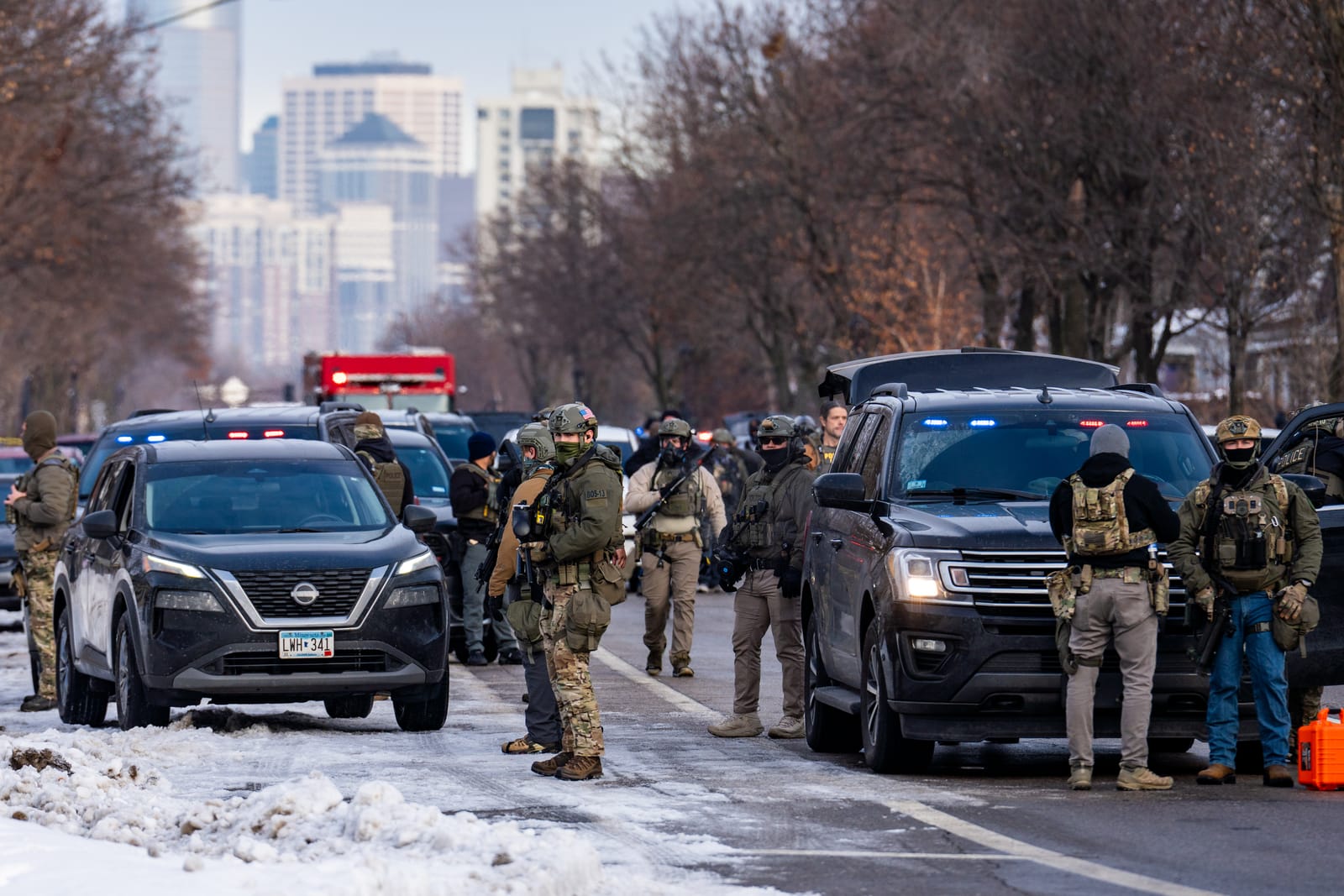
Georgia has quietly become one of the most consequential states in the nation for immigration enforcement. Over the past two decades, the state's immigrant population has grown rapidly — particularly in the Atlanta metropolitan area and in North Georgia's industrial corridors — while the state's political and legal environment has moved aggressively in favor of cooperation with federal immigration authorities. In 2026, community reports submitted through ICE Spotted reveal an enforcement landscape in Georgia that is shaped by extensive local-federal cooperation, widespread participation in the 287(g) program, and a state legal framework that actively prohibits sanctuary-style protections.
This article provides a detailed breakdown of where ICE enforcement activity is being reported across Georgia, the unique dynamics that drive enforcement in each region, the state's legal context, and the resources available to community members who encounter ICE in the Peach State.
Atlanta Metro: The Buford Highway Corridor and Inner Suburbs
The Atlanta metropolitan area is home to the largest concentration of immigrants in the southeastern United States, and it generates the highest volume of ICE enforcement reports in Georgia. The epicenter of reported activity is the Buford Highway corridor — a stretch of commercial roadway running northeast from Atlanta through the cities of Chamblee, Doraville, and into unincorporated DeKalb County. This corridor is home to one of the most ethnically diverse commercial districts in the country, with businesses serving Latino, Asian, African, and Eastern European communities lining both sides of the highway for miles.
Community reports from early 2026 describe a sustained ICE presence along the Buford Highway corridor. Members of the community have reported agents stationed in the parking lots of shopping plazas, conducting surveillance from unmarked vehicles near bus stops along MARTA routes, and approaching individuals at check-cashing businesses and money transfer offices. Several reports describe agents conducting what appear to be coordinated operations at multiple businesses along the corridor simultaneously, arriving in groups of three to five vehicles and detaining individuals at different locations within a short time window.
Community Alert — Buford Highway: Multiple reports from January and February 2026 describe ICE agents operating in and around shopping plazas along Buford Highway between Chamblee Tucker Road and Shallowford Road. Agents have been reported in both marked and unmarked vehicles, and in some cases in plainclothes. If you work or shop along this corridor, remain aware of your surroundings and have emergency contact information for legal aid organizations readily available.
Chamblee and Doraville, two small cities embedded within the northern Atlanta suburbs, have seen particularly intense enforcement activity. Both cities have significant immigrant populations and are served by MARTA rail stations, which community members report ICE agents have used as surveillance points. In Chamblee, reports describe agents conducting operations near the Chamblee MARTA station and in residential neighborhoods east of Peachtree Boulevard. In Doraville, community members have reported activity near the Doraville MARTA station and at apartment complexes along Buford Highway.
Clarkston, a small city in DeKalb County that has been designated as a refugee resettlement community, presents a distinct set of concerns. Home to refugees from dozens of countries — including Myanmar, the Democratic Republic of Congo, Bhutan, Syria, and Somalia — Clarkston has reported ICE activity that community organizations say has created fear and confusion among residents who hold legal refugee status. While ICE operations in Clarkston may be targeting specific individuals rather than the refugee community broadly, the visible presence of federal agents in a community that was built as a place of refuge has had a chilling effect on residents' willingness to engage with public services and institutions.
Gwinnett County: The Highest Concentration of ICE Activity in Georgia
Gwinnett County, located northeast of Atlanta, has emerged as the single most active jurisdiction for ICE enforcement in the state of Georgia. The county's rapid demographic transformation over the past two decades — from a predominantly white suburban county to one of the most diverse counties in the Southeast — has been accompanied by an aggressive posture toward immigration enforcement at the county government level.
Gwinnett County participates in the federal 287(g) program, which authorizes trained jail officers to perform immigration enforcement functions within the county detention facility. Under this agreement, individuals booked into the Gwinnett County jail are screened for immigration status, and those identified as potentially removable noncitizens are referred to ICE. Community advocates argue that this arrangement has turned every arrest in Gwinnett County — including arrests for minor traffic violations and misdemeanors — into a potential immigration enforcement event.
Beyond the jail-based 287(g) program, community reports from Gwinnett County describe extensive ICE field operations. Reports from cities including Norcross, Duluth, Lawrenceville, and Lilburn describe agents conducting operations near apartment complexes, in the parking lots of strip malls, and outside the Gwinnett County courthouse. The courthouse operations have drawn particular attention: multiple reports describe agents waiting in the parking lot of the Gwinnett County Justice and Administration Center and detaining individuals as they arrive for or leave court appearances on minor criminal matters.
287(g) Program Note: Gwinnett County is one of multiple Georgia counties that participate in the federal 287(g) program. Under this agreement, trained county jail officers have the authority to screen individuals for immigration status and issue ICE detainers. This means that any arrest in a participating county — even for a minor traffic offense — can result in immigration enforcement consequences. Other Georgia counties with 287(g) agreements include Cobb, Hall, Whitfield, and several others.
The city of Norcross, within Gwinnett County, has generated a particularly high volume of reports. Community members describe ICE vehicles conducting regular patrols through apartment complexes along Jimmy Carter Boulevard and Buford Highway, with agents reportedly photographing vehicles and license plates. In some instances, agents have been reported knocking on apartment doors during early morning hours, identifying themselves as police, and detaining individuals who answer the door.
North Georgia: Dalton, Gainesville, and the Industrial Corridor
North Georgia's industrial economy has attracted a large immigrant workforce over the past three decades, and in 2026, the region has become a significant zone of ICE enforcement activity. Two cities in particular — Dalton and Gainesville — generate the majority of reports from this part of the state, each with a distinct industrial profile and enforcement pattern.
Dalton, known as the "Carpet Capital of the World," is home to a concentration of carpet and flooring manufacturing facilities that employ a workforce that is estimated to be more than 50 percent Latino. The city's population of approximately 34,000 is nearly half Hispanic, making it one of the most Latino cities in the Southeast. Community reports from Dalton describe ICE agents conducting operations near manufacturing facilities, at apartment complexes that house factory workers, and along the commercial corridors of Walnut Avenue and Glenwood Avenue.
In January 2026, community members submitted multiple reports describing what appeared to be a coordinated workplace operation at or near carpet manufacturing facilities in the Dalton industrial district. Witnesses described ICE vehicles staged at intersections surrounding a factory complex during a shift change, with agents stopping and questioning workers as they exited the facility. While the exact number of individuals detained was not confirmed through community reports, witnesses estimated that multiple people were taken into custody during the operation.
Gainesville, located approximately 55 miles northeast of Atlanta, is the center of Georgia's poultry processing industry — one of the largest in the nation. The city's poultry plants employ thousands of workers, many of them immigrants from Mexico and Central America. Community reports from Gainesville describe ICE agents conducting surveillance near poultry processing facilities, at worker housing complexes, and at commercial establishments along Jesse Jewell Parkway and Athens Highway that serve the immigrant community.
Workplace Enforcement Alert: Community reports from both Dalton and Gainesville indicate that ICE agents have been conducting operations near manufacturing and processing facilities, particularly during shift changes. Workers in these industries should be aware of their rights: you have the right to remain silent, you are not required to show immigration documents to anyone other than an immigration officer with proper authority, and you have the right to speak with an attorney before answering questions. If ICE enters your workplace, remain calm and do not run.
Savannah and Coastal Georgia
Savannah, Georgia's oldest city and a major port on the Atlantic coast, has reported a smaller but still notable volume of ICE enforcement activity in 2026. The city's immigrant community, concentrated in neighborhoods south and west of the historic district, has submitted reports describing ICE vehicles near public housing complexes, at bus stops along major transit routes, and in the vicinity of the Chatham County courthouse.
The Port of Savannah, one of the busiest container ports in the United States, has a large workforce that includes immigrant laborers in warehousing, logistics, and support services. Community reports describe ICE activity in the Garden City area near the port, with agents reportedly conducting operations at businesses that provide labor to the port's logistics chain. Reports also describe enforcement activity in the Savannah suburb of Pooler and in nearby Richmond Hill, communities that have experienced rapid population growth and are home to growing immigrant populations.
Along the Georgia coast south of Savannah, the cities of Brunswick, St. Marys, and Waycross have generated smaller numbers of reports. These reports primarily describe ICE vehicles conducting what appear to be transit operations — moving through communities on their way to or from specific enforcement actions rather than conducting prolonged operations in the area.
Georgia's Legal Context: No Sanctuary, 287(g) Expansion, and SB 452
Georgia's legal environment is among the most hostile to immigrant communities of any state in the country. The state has no sanctuary protections at any level — no state law, county ordinance, or city policy limits cooperation between local law enforcement and federal immigration authorities. In fact, Georgia law moves aggressively in the opposite direction.
SB 452, Georgia's anti-sanctuary law, prohibits any city, county, or local government entity from adopting policies that restrict cooperation with federal immigration enforcement. The law effectively prevents any Georgia municipality from following the model of sanctuary cities in other states. Even if a city council or county commission wanted to limit its police department's cooperation with ICE, SB 452 would prohibit it from doing so.
Georgia also has one of the highest levels of 287(g) participation of any state in the country. Multiple counties — including Gwinnett, Cobb, Hall, Whitfield, Floyd, Lumpkin, and Barrow — maintain active 287(g) agreements with ICE. Under these agreements, trained jail officers in each participating county can screen individuals booked into local jails for immigration status and issue ICE detainers. Community advocates estimate that the cumulative effect of these agreements means that a significant majority of Georgia's immigrant population lives in a county where any arrest can trigger immigration enforcement consequences.
Legal Note: Georgia law (SB 452) prohibits any local government from adopting sanctuary-style policies. This means that unlike in states like Illinois or California, there is no separation between local law enforcement and federal immigration enforcement in Georgia. Any interaction with law enforcement — including a traffic stop, a misdemeanor arrest, or even a report as a crime victim — can potentially lead to immigration enforcement consequences if you are in a county that participates in the 287(g) program.
The state also requires law enforcement officers to attempt to verify the immigration status of individuals arrested for certain offenses and to report suspected undocumented immigrants to ICE. Georgia was one of the first states to enact legislation requiring E-Verify for employers with more than a certain number of employees, and the state's enforcement-first approach to immigration extends across multiple areas of state law and policy.
How to Report ICE Sightings in Georgia
If you witness ICE enforcement activity anywhere in Georgia, submitting a timely and detailed report helps your community stay informed and helps legal organizations track enforcement patterns. When documenting a sighting, include as much detail as possible:
- Location: City, county, cross streets, or nearby landmarks. In the Atlanta metro area, specify the city or neighborhood name (e.g., Chamblee, Norcross, Buford Highway).
- Time: When you observed the activity, including whether agents appeared to be setting up, actively conducting an operation, or departing.
- Vehicles: Number, type (van, SUV, sedan), color, and whether they had government plates, visible markings, or were unmarked.
- Agents: Number of agents visible, attire (tactical gear, plainclothes, vests with "POLICE" or "ICE" markings), and what they appeared to be doing.
- Local law enforcement: Whether county sheriff's deputies, city police, or other local agencies appeared to be involved. Given Georgia's extensive 287(g) participation, noting local law enforcement involvement is particularly important.
You can submit a report using the anonymous form below or through the ICE Spotted homepage. All reports are anonymous — no IP address, name, or identifying information is collected or stored.
Legal Resources for Georgia Residents
Despite Georgia's challenging legal environment, several organizations provide critical legal assistance and community support to immigrants in the state:
- GALEO (Georgia Association of Latino Elected Officials): While primarily a civic engagement organization, GALEO provides community education on immigration rights, connects individuals with legal resources, and advocates for immigrant-protective policies at the state and local level.
- Latin American Association: Based in Atlanta, this organization provides immigration legal services, know-your-rights training, community education, and case management for immigrants facing enforcement actions. They operate one of the largest immigration legal services programs in the Southeast.
- Southeast Immigrant Freedom Initiative (SIFI): A project of the Southern Poverty Law Center that provides legal representation and support to detained immigrants in the Southeast, including individuals held at the Stewart Detention Center and the Irwin County Detention Center in Georgia.
- Southern Poverty Law Center (SPLC): The SPLC's Southeast Immigrant Freedom Initiative provides legal orientation programs, direct representation, and know-your-rights resources for detained immigrants across the region, with significant operations in Georgia.
- Coalicion de Lideres Latinos (CLILA): A Georgia-based grassroots organization that provides rapid response coordination, community defense training, and direct support to families affected by immigration enforcement in the Atlanta metro area and North Georgia.
Remember: Regardless of your immigration status, you have constitutional rights in Georgia. You have the right to remain silent, the right to refuse consent to a search of your home or vehicle, and the right to ask whether agents have a judicial warrant signed by a judge. You are not required to open your door to ICE agents unless they present a warrant signed by a federal judge. If you are stopped by local police, you have the right to remain silent about your immigration status, although Georgia law requires you to provide your name if asked.
ICE Activity Map: Georgia Reports
The map below shows recent community-reported ICE activity across Georgia. Red markers indicate reported sightings, checkpoints, and enforcement operations in the Atlanta metro area, North Georgia, and coastal communities.