 ICE Spotted
ICE ERO Agents: How to Identify Enforcement and Removal Operations Officers
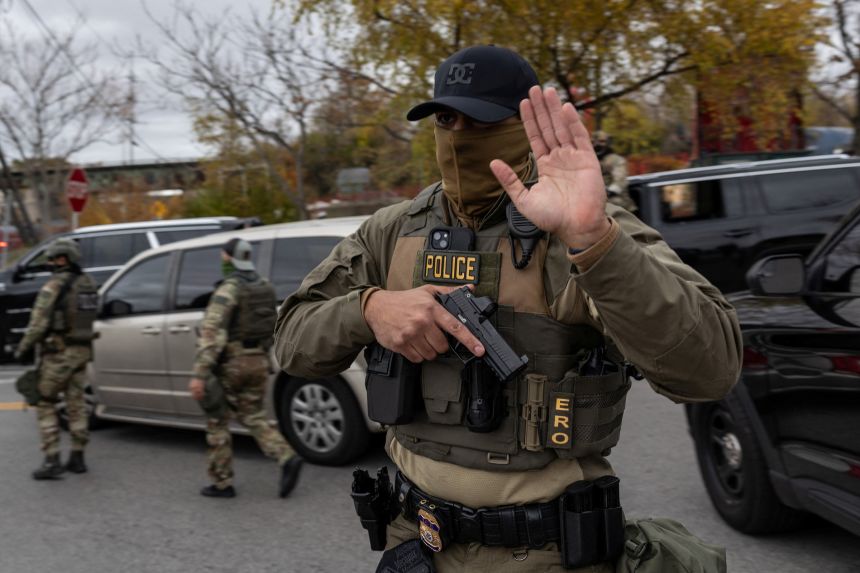
When people talk about "ICE agents" conducting arrests and deportations in communities across the United States, they are almost always referring to officers from one specific division: Enforcement and Removal Operations, commonly known as ERO. While ICE as an agency has multiple branches, ERO is the operational arm responsible for identifying, arresting, detaining, and deporting individuals who are in the country without authorization or who have final orders of removal. Understanding what ERO agents look like, how they operate, and how they differ from other federal agents is critical for anyone who wants to accurately identify and report enforcement activity in their community.
What Is ICE ERO? Understanding the Mission
Enforcement and Removal Operations is one of two primary operational divisions within U.S. Immigration and Customs Enforcement, which itself falls under the Department of Homeland Security (DHS). ERO's stated mission is to enforce the nation's immigration laws by identifying and apprehending removable individuals, detaining them when necessary, and carrying out their removal from the United States.
ERO manages the largest immigration detention system in the world, overseeing hundreds of detention facilities across the country. The division is organized into field offices that correspond to geographic regions, with major offices in cities including Los Angeles, New York, Chicago, Houston, Miami, Atlanta, and San Francisco. Each field office has its own Fugitive Operations teams, detention management staff, and deportation officers who carry out day-to-day enforcement activities.
In 2026, ERO has been operating at an increased tempo compared to previous years. Community reports submitted to ICE Spotted show a clear uptick in ERO field operations, particularly in major metropolitan areas and regions with large immigrant populations. Understanding what these agents look like and how they behave is more important than ever.
ERO Agent Gear and Appearance: What to Look For
ERO agents in the field wear a distinctive combination of tactical and law enforcement gear that, once you know what to look for, makes them identifiable even from a distance. Here is a detailed breakdown of the gear and appearance that community members have consistently reported.
Tactical Vests and Body Armor
The most visible identifier of an ERO agent is their tactical vest. ERO officers typically wear a load-bearing vest over their clothing — either over a uniform or over civilian attire. These vests are most commonly dark navy blue or black and feature the word "POLICE" printed in large white or yellow letters across the front chest panel and across the back. Some vests also display "ICE" in smaller text, while others may show "ERO" on a shoulder patch or back panel. The vest serves as both body armor and a carrier for equipment including magazines, handcuffs, a radio, and a body camera.
Face Coverings and Balaclavas
One of the most frequently reported characteristics of ERO agents during field operations is the use of face coverings. Agents commonly wear balaclavas (full face masks that cover everything except the eyes), neck gaiters pulled up over the nose and mouth, or surgical-style masks. Community reports indicate that face coverings are worn most consistently during early-morning residential operations and in areas where agents anticipate being photographed or recorded by community members. While agents may cite operational security as the reason for face coverings, this practice makes individual identification of officers significantly more difficult.
Important: Even when wearing face coverings, ICE ERO agents are required to carry and display identification when asked. You have the right to ask any agent to identify themselves and show their credentials. If an agent refuses to identify themselves, document this fact along with the time, location, and any other details you can observe.
Sidearms and Equipment
ERO agents are armed federal law enforcement officers. In the field, they carry a standard-issue sidearm — typically a Heckler & Koch P2000 or SIG Sauer P320 — in a holster on their duty belt or attached to their tactical vest via a drop-leg holster. In addition to their firearm, agents carry handcuffs (often multiple pairs), a portable radio on their vest or belt, a flashlight, and increasingly in 2026, a body-worn camera mounted on their vest chest area.
Body cameras have become more common across ERO operations in recent years. The cameras are small rectangular devices mounted on the front of the tactical vest, typically on the upper chest near the shoulder. When activated, many body cameras display a small blinking light. Community members should be aware that the presence of body cameras does not necessarily mean footage will be made available — policies on body camera activation and footage retention vary by field office.
Badges and Credentials
ERO agents carry a Department of Homeland Security badge and a credential card (often called a "cred" or "commission"). The badge is a gold-colored shield with the DHS seal and the text "Immigration and Customs Enforcement." During field operations, badges may be displayed on the agent's belt, clipped to their vest, or hung on a chain or lanyard around their neck. In plainclothes operations, the badge may be concealed until the agent chooses to display it.
ERO Vehicles: Unmarked but Identifiable
ERO teams almost exclusively use unmarked vehicles during enforcement operations. The most commonly reported vehicle types are large SUVs — particularly the Chevrolet Tahoe, Ford Explorer, Ford Expedition, and Dodge Durango — in dark colors such as black, dark blue, and dark gray. These vehicles lack light bars, sirens, or agency markings on the exterior, which is what makes them "unmarked."
However, there are reliable indicators that distinguish federal vehicles from civilian ones:
- Government license plates: Federal vehicles carry U.S. government plates, which look different from standard state-issued plates. They often have a distinctive blue or white background with a unique numbering format.
- Heavy window tinting: ERO vehicles typically have heavily tinted rear and side windows, often darker than what civilian window tint laws allow in most states.
- Multiple antennas: Look for extra communication antennas — small black or silver antennas mounted on the roof, trunk, or rear quarter panels that are not standard on civilian models.
- Interior equipment: Through the windshield, you may be able to see a mounted laptop computer, a radio unit, or a cage/partition separating the front and rear seats.
- Push bumpers: Some federal SUVs have aftermarket push bumpers — metal bars mounted on the front bumper — which are uncommon on civilian vehicles.
For transport operations, ERO uses unmarked passenger vans, most commonly the Ford Transit and Chevrolet Express. These white or dark-colored vans are used to transport detained individuals from arrest locations to processing facilities. Community reports frequently describe seeing these vans in groups of two to four, arriving in neighborhoods simultaneously.
ERO vs. HSI: How to Tell the Difference
ICE has two main operational divisions: ERO (Enforcement and Removal Operations) and HSI (Homeland Security Investigations). While both fall under ICE, they have very different missions, and their agents look and operate differently in the field. Knowing the difference helps community members submit more accurate reports.
Key Distinction: ERO agents conduct immigration arrests and deportations. HSI agents investigate criminal organizations, smuggling, fraud, and other complex crimes. If you see agents conducting a residential arrest or approaching individuals to check their immigration status, you are almost certainly witnessing an ERO operation. If you see a heavily armed tactical team executing a search warrant with battering rams and flashbang grenades, you are more likely seeing an HSI Special Response Team.
Appearance Differences
ERO agents typically wear the navy or black "POLICE" vest described above, with relatively standard law enforcement equipment. HSI tactical teams, by contrast, wear full military-style gear: helmets with face shields or night vision mounts, plate carriers with visible rifle magazine pouches, and olive or tan tactical uniforms. HSI agents carry rifles — typically M4-style carbines — in addition to sidearms, while ERO agents in routine operations generally carry only sidearms.
ERO vests usually say "POLICE" in large letters. HSI tactical gear may display "POLICE / HSI" or "POLICE / FEDERAL AGENT" on the vest and helmet. HSI agents are also more likely to wear matching uniforms, while ERO agents may wear a mix of tactical gear over civilian clothing.
Operational Differences
ERO operations tend to be smaller in scale — typically involving four to eight agents arriving in two to four vehicles to arrest one or a small number of specific individuals. These operations are focused on apprehension and often occur at residences, workplaces, or in public spaces.
HSI operations are typically larger, more aggressive, and focused on executing search or arrest warrants related to criminal investigations. HSI may deploy 20 or more agents with armored vehicles, K-9 units, and air support. These operations look more like SWAT raids than immigration enforcement.
Common ERO Operation Patterns
Based on thousands of community reports compiled through ICE Spotted and similar platforms, ERO operations follow recognizable patterns that community members can learn to identify.
Early Morning Residential Raids
The most commonly reported ERO operation type is the early morning residential arrest. Agents typically arrive at a target address between 4:00 AM and 7:00 AM, when individuals are most likely to be home and least likely to be alert. Agents approach the door, knock or ring the doorbell, and identify themselves as "police" — sometimes without specifying that they are immigration officers. If the individual opens the door, agents will attempt to make the arrest immediately.
Courthouse Arrests
ERO agents have been reported conducting arrests outside courthouses across the country. Agents may wait in the lobby, hallways, or parking areas of courthouses and approach individuals after they have appeared for hearings — often unrelated civil matters like traffic violations or family court. This practice has been widely criticized because it discourages immigrants from accessing the justice system.
Workplace Operations
ERO conducts workplace enforcement operations, often called "worksite raids," at businesses suspected of employing undocumented workers. These operations can involve large numbers of agents arriving at a workplace, securing the perimeter, and checking the identification of all workers present. Workplace operations are typically larger than residential arrests and may involve dozens of arrests at a single location.
Transportation Hubs
Community reports consistently describe ERO agents operating in and around bus stations, train platforms, and airports. Agents may approach individuals, ask questions, and request identification. At bus stations, agents have been reported boarding Greyhound and other intercity buses to check passengers' documents, a practice that has generated significant legal controversy.
What to Do If ERO Agents Approach You
If you are approached by individuals you believe to be ICE ERO agents, remember these key points:
- You have the right to remain silent. You are not required to answer questions about your immigration status, country of origin, or how you entered the United States.
- Ask if you are free to leave. If agents say yes, calmly walk away. If they say no, you are being detained, but you still have the right to remain silent.
- Ask to see identification and a warrant. Agents are required to carry credentials. If they claim to have a warrant, ask to see it. A valid arrest warrant must be signed by a federal judge — not just an administrative warrant signed by an ICE supervisor.
- Do not sign anything. Do not sign any documents without first speaking to an attorney. Signing certain forms can waive your rights to a hearing before an immigration judge.
- Do not open your door. If agents come to your home and do not have a judicial warrant, you are not required to open the door. Speak through the closed door and ask agents to slide any warrant under the door so you can verify it.
- Document everything. If it is safe to do so, note the time, location, number of agents, vehicle descriptions, and any badge numbers or names you can observe. Submit this information to ICE Spotted to help your community.
Remember: These rights apply to everyone in the United States, regardless of immigration status. The Fourth and Fifth Amendments to the U.S. Constitution protect all individuals on U.S. soil from unreasonable searches and guarantee the right against self-incrimination.
Reporting ERO Activity in Your Community
Accurate community reporting is one of the most effective tools for keeping neighborhoods informed about ERO operations. When you submit a report, your observations are combined with reports from other community members to build a real-time picture of enforcement activity. This information helps families make informed decisions about their safety and helps legal organizations track enforcement patterns.
When reporting ERO activity specifically, note whether agents were wearing "POLICE" vests, whether they had face coverings, and what type of vehicles were present. This level of detail helps distinguish ERO operations from HSI operations or local police activity, making the data more useful for the entire community. Use the anonymous form below to submit a sighting — no personal information is collected.
ICE Activity Map: Real-Time Reports
The map below shows recent community-reported ICE activity across the United States. Red markers indicate reported sightings, checkpoints, and enforcement operations.