 ICE Spotted
ICE Agent Patches and Markings: How to Identify Federal Immigration Officers
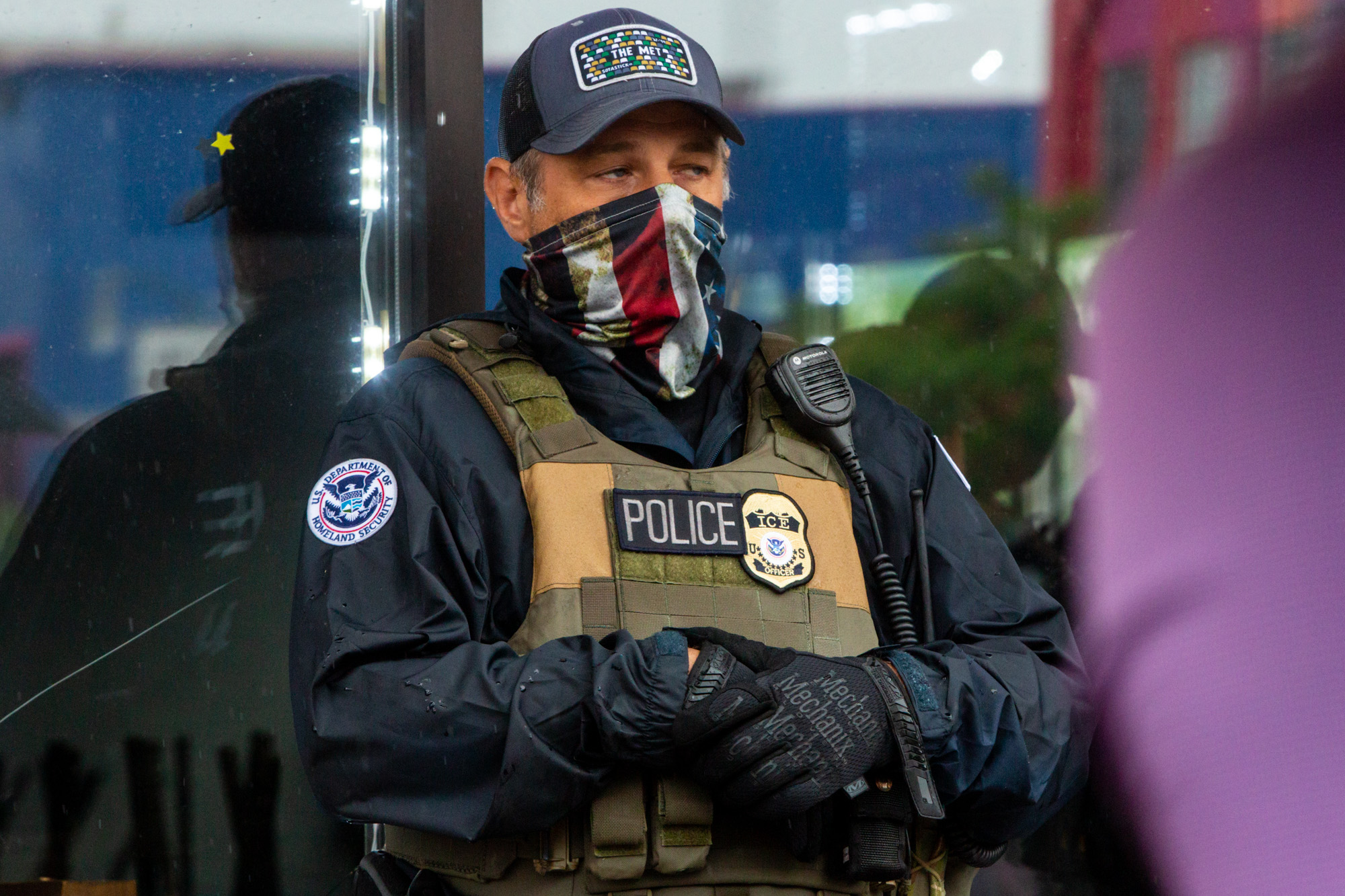
When Immigration and Customs Enforcement (ICE) agents operate in your community, being able to accurately identify them is a critical skill for safety and awareness. Federal immigration officers wear a range of patches, vest markings, badges, and tactical gear that distinguish them from local police, other federal agencies, and private security personnel. Understanding these visual identifiers allows community members to file accurate reports, alert neighbors, and exercise their legal rights with confidence. This comprehensive guide breaks down every patch, marking, and piece of gear that ICE agents wear during operations in 2026, and explains how to tell the difference between ICE's two primary operational divisions.
The Department of Homeland Security Shoulder Patch
Every ICE agent, regardless of division or assignment, falls under the Department of Homeland Security (DHS). The DHS shoulder patch is one of the most reliable identifiers of a federal immigration officer. This patch is typically worn on the upper left sleeve of tactical uniforms, field jackets, and polo shirts. It features the DHS seal: a circular emblem with an eagle, the American flag, and the words "U.S. DEPARTMENT OF HOMELAND SECURITY" around the border.
The DHS patch is approximately three to four inches in diameter and is usually rendered in subdued colors for tactical operations — dark blue, olive drab, or black-on-black — rather than the full-color version seen on dress uniforms. During plainclothes or low-visibility operations, agents may not display the DHS patch at all, relying instead on a badge worn on a belt clip or around the neck on a lanyard. However, when agents are in tactical gear, the DHS patch is almost always present on at least one sleeve.
ICE-Specific Patches: ERO vs. HSI
ICE has two primary operational divisions, each with its own set of patches and markings. Knowing the difference between these divisions is essential because they serve different functions and their agents appear differently in the field.
Enforcement and Removal Operations (ERO) Patches
ERO is the division responsible for arresting, detaining, and deporting individuals. ERO agents are the ones most commonly encountered during residential operations, workplace raids, courthouse arrests, and community enforcement sweeps. ERO-specific patches typically feature the text "ERO" in bold block letters, sometimes accompanied by the ICE agency seal. These patches appear on tactical vests, baseball caps, and the back panels of body armor carriers.
In 2026, ERO field agents most commonly wear a navy blue or black tactical vest with the word "POLICE" in large white or reflective letters across the front chest panel. The back of the vest typically reads "POLICE" on the upper portion and "ICE" or "ERO" on the lower portion. Some ERO vests also include a smaller patch reading "FEDERAL AGENT" beneath the POLICE marking. The color scheme is important to note: ERO tactical vests are almost exclusively dark navy, black, or dark gray, in contrast to the olive and tan gear favored by HSI tactical teams.
ERO agents also wear cloth patches on their baseball caps. These caps are usually dark blue or black and feature either the ICE seal, the letters "ERO," or the words "POLICE / ICE" embroidered on the front panel. Some agents wear beanies or watch caps with smaller ICE patches during cold-weather operations.
Homeland Security Investigations (HSI) Patches
HSI is ICE's investigative arm, responsible for cross-border criminal investigations including drug trafficking, weapons smuggling, human trafficking, and financial crimes. HSI agents also participate in targeted immigration enforcement operations, particularly those involving criminal organizations. HSI patches are visually distinct from ERO patches and are an important identifier for community members.
HSI tactical teams wear patches that prominently display "HSI" or "HOMELAND SECURITY INVESTIGATIONS" in bold lettering. These patches often appear on olive drab, tan, or coyote brown tactical vests and plate carriers, setting HSI apart from the darker-colored ERO gear. HSI helmet patches — affixed to the front or sides of ballistic helmets — typically show the HSI badge or the letters "HSI" in contrasting colors for visibility.
HSI special agents who are not part of tactical teams often wear business casual clothing with a badge displayed on a belt clip or neck lanyard. Their credentials identify them as "HOMELAND SECURITY INVESTIGATIONS / SPECIAL AGENT" and include the HSI badge, which features the ICE seal with the words "SPECIAL AGENT" beneath it. When HSI agents wear raid jackets during operations, these jackets are typically dark blue or black windbreakers with "POLICE / HSI" or "POLICE / FEDERAL AGENT" printed in large yellow or white letters on the back.
Key distinction: ERO agents wear dark navy or black tactical gear marked "POLICE / ICE" or "POLICE / ERO." HSI tactical teams wear olive, tan, or coyote brown gear marked "POLICE / HSI." If you see olive tactical gear with "HSI" patches, this indicates a Homeland Security Investigations team rather than standard immigration enforcement.
Vest Markings: POLICE, FEDERAL AGENT, and More
The most visible marking on any ICE agent in the field is the large text on their tactical vest or body armor carrier. These markings serve a dual purpose: they identify the wearer as law enforcement to the public and to other agencies, and they provide legal notice that the person is a federal officer. Understanding these vest markings is critical for accurate identification.
The most common vest marking is "POLICE" in large white, yellow, or reflective block letters across the front and back of the vest. This marking is standardized across DHS law enforcement components and is used by both ERO and HSI agents. Below the POLICE marking, agents typically display their specific agency: "ICE," "ERO," "HSI," or "FEDERAL AGENT." Some vests combine markings, reading "POLICE / FEDERAL AGENT" on the front and "POLICE / ICE" on the back.
It is important to note that the word "POLICE" on a tactical vest does not mean the wearer is a local or state police officer. Federal law enforcement officers across multiple agencies — including ICE, the FBI, DEA, ATF, and U.S. Marshals — use the "POLICE" marking on tactical gear. The distinguishing detail is the secondary marking beneath or alongside "POLICE" that identifies the specific agency.
Badges and Credentials
ICE agents carry official credentials and a badge that identify them as federal law enforcement officers. The ICE badge is a gold shield-shaped badge featuring the DHS seal in the center, with "IMMIGRATION AND CUSTOMS ENFORCEMENT" around the border and the agent's title — typically "SPECIAL AGENT" for HSI or "DEPORTATION OFFICER" for ERO — engraved below the seal. Each badge has a unique identification number.
During field operations, agents display their badge in one of several ways: clipped to the front of a tactical vest, attached to a belt holster, or hanging from a neck lanyard over their vest or jacket. Plainclothes agents may keep their badge concealed until they identify themselves, at which point they typically flip open a credential case that displays both the badge and a photo identification card.
Your right: You can ask any person claiming to be a federal agent to show their badge and credentials. Legitimate ICE agents carry official photo identification issued by the Department of Homeland Security. If someone refuses to show identification, document the encounter and report it immediately.
Gear and Equipment Identifiers
Beyond patches and vest markings, ICE agents carry distinctive gear that can help with identification. Understanding these equipment patterns adds another layer of recognition for community members who may observe agents from a distance or in low-light conditions.
Radios and Communication Equipment
ICE agents use encrypted federal radio systems that differ from the equipment used by most local police departments. Agents typically carry a handheld radio clipped to the front of their vest or attached to a shoulder-mounted microphone. The radios are usually black Motorola models with a coiled earpiece wire running up to an in-ear receiver. During large operations, agents may also wear a clear coiled-tube earpiece that is visible running from the collar to the ear, a hallmark of federal law enforcement communications.
Body Cameras
As of 2026, ICE has expanded its body camera program across ERO and HSI field operations. Body cameras are typically mounted on the front of the tactical vest, on the chest area near the POLICE marking. The most commonly observed models are small black rectangular units with a forward-facing lens and a small indicator light. While body camera policies vary by field office and operation type, community members should note whether agents appear to be wearing activated body cameras, as this information can be relevant in legal proceedings.
Firearms and Tactical Equipment
ERO agents typically carry a sidearm — most commonly a SIG Sauer P320 or similar duty pistol — in a thigh-mounted or belt-mounted holster. They also carry handcuffs, flex cuffs, OC spray, and a flashlight. HSI tactical teams carry significantly heavier equipment, including rifles (commonly the M4 carbine pattern), ballistic helmets with face shields or night vision mounts, breaching tools, and flash-bang grenades. The level of armament is itself an identifier: heavily armed teams in full tactical gear with rifles and helmets are more likely to be HSI special response teams or joint task force operations rather than standard ERO arrest teams.
How to Distinguish ICE from Local Police
One of the most common questions community members ask is how to tell whether the officers they see are ICE agents or local police. This distinction matters because local police in many jurisdictions operate under different rules regarding immigration enforcement, and some cities have sanctuary policies that limit local police cooperation with ICE.
Key differences to look for include:
- Vehicle markings: Local police use marked patrol cars with city or county insignia, light bars, and department names. ICE agents predominantly use unmarked dark SUVs and vans with government plates and no visible agency markings.
- Uniform patches: Local police wear patches identifying their city, county, or state department. ICE agents wear DHS, ICE, ERO, or HSI patches. Look for the DHS eagle seal or the letters "ICE" on any visible patch.
- Vest text: While both local police and ICE use "POLICE" on tactical vests, ICE vests include the secondary marking "ICE," "ERO," "HSI," or "FEDERAL AGENT." Local police vests typically display their department name.
- Badge style: ICE badges are gold shield-shaped federal badges with the DHS seal. Local police badges vary widely but typically feature the city or county seal and department name.
- Number of agents: ICE operations typically involve groups of four to twelve agents arriving simultaneously in multiple unmarked vehicles. Local police responses vary but usually involve marked units.
- Time of operations: ICE residential operations concentrate heavily in the early morning hours between 4:00 AM and 7:00 AM. While local police operate around the clock, the early morning timing combined with unmarked vehicles and federal patches strongly suggests ICE activity.
What to Do When You Identify ICE Agents
If you observe individuals matching the descriptions above operating in your community, stay calm and prioritize your safety. You have the constitutional right to observe and photograph law enforcement officers operating in public spaces. From a safe distance, note the patches, vest markings, vehicle types, number of agents, location, and time of the sighting. Submit an anonymous report through ICE Spotted to help your community stay informed about enforcement activity in real time.
ICE Activity Map: Real-Time Reports
The map below shows recent community-reported ICE activity across the United States. Red markers indicate reported sightings, checkpoints, and enforcement operations.