 ICE Spotted
ICE HSI Tactical Teams: Understanding Large-Scale Enforcement Operations in 2026
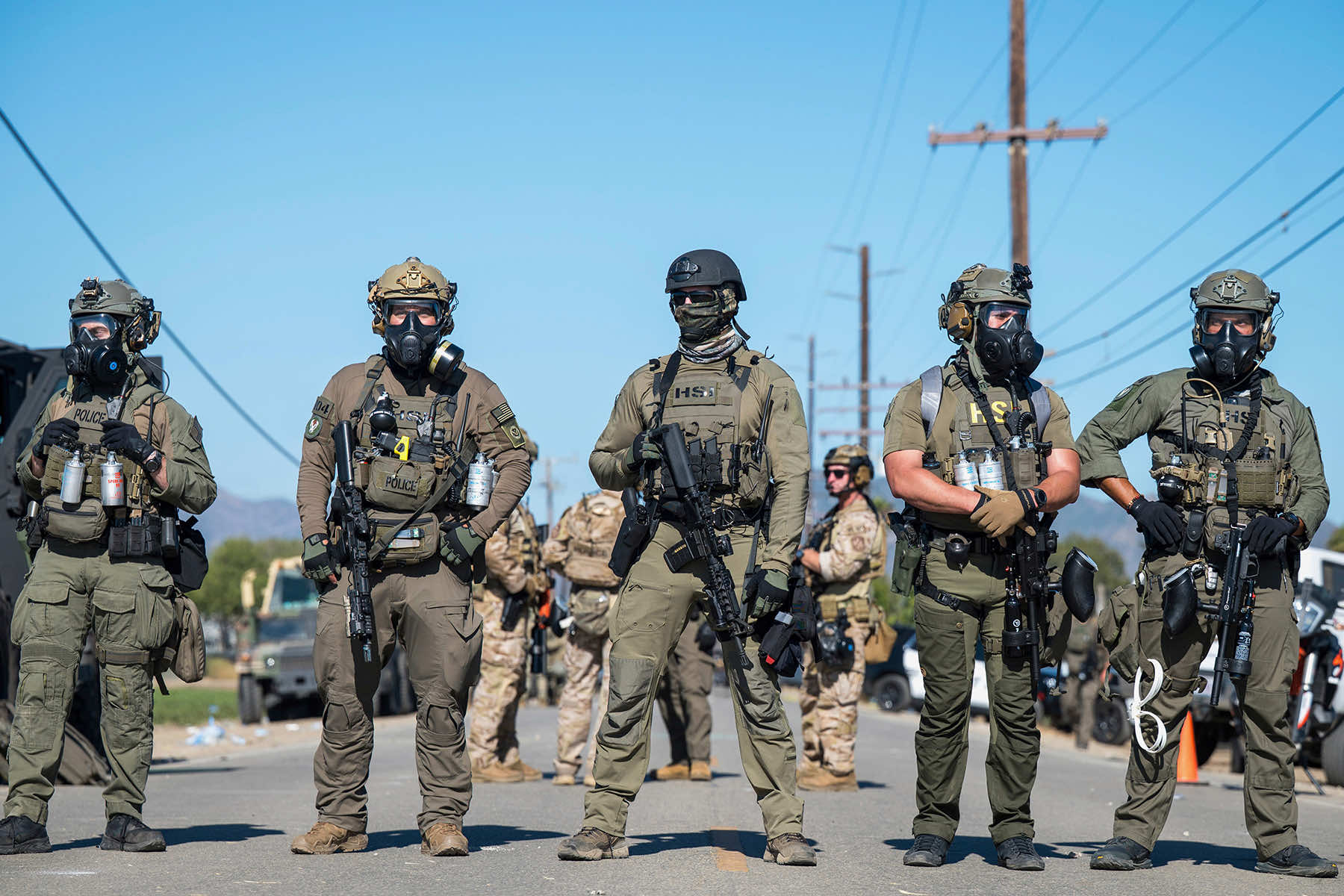
In 2026, images and reports of heavily armed federal agents operating in American communities have become increasingly common. Many of these operations are carried out by Homeland Security Investigations (HSI) tactical teams, a specialized branch of Immigration and Customs Enforcement (ICE) that conducts high-risk enforcement actions across the United States. For community members who encounter these operations, the experience can be alarming and confusing. This guide provides a comprehensive, factual overview of what HSI tactical teams are, how they operate, the gear and equipment they use, where large-scale operations are being conducted, and what you should do if you witness one in your neighborhood.
What Is ICE HSI?
Homeland Security Investigations is the principal investigative arm of the Department of Homeland Security (DHS). While many people associate ICE exclusively with immigration enforcement and deportation, HSI operates with a much broader mandate. HSI is responsible for investigating transnational crime and threats, including drug trafficking, weapons smuggling, human trafficking, financial crimes, cybercrime, and violations of export controls. HSI employs more than 6,000 special agents and maintains offices in over 200 cities across the United States and in more than 50 countries around the world.
It is important to distinguish HSI from ICE's other major branch, Enforcement and Removal Operations (ERO). ERO is the division primarily responsible for arresting, detaining, and deporting individuals who are in the country without authorization or who have final orders of removal. HSI, by contrast, focuses on criminal investigations. However, in 2026, the operational lines between these two branches have blurred significantly. HSI tactical teams have been increasingly deployed to support ERO operations, particularly during large-scale enforcement actions that target multiple locations simultaneously.
How HSI Tactical Teams Operate
HSI tactical teams, formally known as Special Response Teams (SRTs), are the equivalent of SWAT units within the ICE organizational structure. Each HSI field office maintains an SRT that can be deployed for high-risk arrests, search warrant executions, and large-scale enforcement operations. These teams undergo extensive tactical training, including close-quarters combat, dynamic entry techniques, use of less-lethal munitions, and coordinated multi-team operations.
Pre-Operation Planning
Large-scale HSI operations typically involve weeks or months of planning before any agents are deployed in the field. The planning phase includes intelligence gathering, surveillance of target locations, coordination with other federal, state, and local law enforcement agencies, and detailed operational briefings for all participating personnel. Operations that target multiple locations simultaneously -- sometimes referred to as "surge operations" -- require particularly complex logistics, including the staging of tactical teams at multiple assembly points, coordination of synchronized entry times, and pre-positioning of transport vehicles for individuals who may be detained.
Execution and Formation Tactics
When an HSI tactical operation begins, agents typically arrive at a target location in a convoy of vehicles, including both marked and unmarked SUVs, armored vehicles, and prisoner transport vans. Community reports submitted to ICE Spotted consistently describe operations that begin in the early morning hours, most commonly between 4:00 AM and 6:00 AM, when targets are most likely to be at home and situational awareness in the surrounding neighborhood is lowest.
Upon arrival, tactical teams establish a perimeter around the target location. Agents take up positions covering all exits, including rear doors, windows, and fire escapes. The entry team then approaches the primary entrance, typically announces their presence by shouting "Police" or "Federal agents," and either waits for the door to be opened or executes a forced entry using breaching tools such as battering rams, Halligan bars, or hydraulic door spreaders. In some cases, agents have been reported using flashbang grenades -- diversionary devices that produce a loud bang and bright flash to disorient occupants.
Know the difference: HSI tactical teams (SRTs) are distinct from ERO arrest teams. HSI agents typically wear matching olive or black tactical uniforms with "POLICE / HSI" markings, helmets, and carry rifles. ERO agents more commonly wear tan tactical vests over civilian clothing with "POLICE / ICE" or "POLICE / ERO" markings and carry handguns.
Gear and Equipment Used by HSI Tactical Teams
HSI tactical agents are among the most heavily equipped law enforcement personnel operating on American soil. Understanding their gear can help community members accurately identify HSI operations and distinguish them from other law enforcement activities.
Body Armor and Uniforms
HSI SRT members wear Level III or Level IV ballistic body armor capable of stopping rifle rounds. This armor is typically worn in a plate carrier configuration over a tactical uniform. The uniform itself is usually olive drab, dark green, or black, and features agency patches on the shoulders, chest, and back. Helmets are standard issue for tactical operations and typically display "HSI" or "POLICE" markings. Many agents also wear ballistic-rated eye protection, hearing protection, and gas masks or respirators, particularly during operations where chemical agents such as tear gas may be deployed.
Weapons
HSI tactical agents carry a range of firearms depending on their role within the team. Standard sidearms include the SIG Sauer P320 or Glock 19 pistol, worn in a thigh or belt holster. Primary weapons include AR-15 pattern rifles chambered in 5.56mm NATO, often equipped with optical sights, weapon-mounted lights, and laser aiming devices. Designated marksmen within the team may carry precision rifles for overwatch positions. Less-lethal options include 40mm launchers for deploying tear gas or rubber projectiles, and Tasers for close-range encounters.
Vehicles and Transport
HSI tactical operations involve a variety of specialized vehicles. Marked tactical vehicles may display "POLICE / HOMELAND SECURITY INVESTIGATIONS" decals and feature emergency lighting. Armored vehicles, including the Lenco BearCat, have been documented in HSI operations in multiple cities. Transport vans -- typically white or dark-colored Ford Transits or Chevrolet Express vans -- are used to move detained individuals from the operation site to processing facilities. Community reports frequently note convoys of four to eight vehicles arriving simultaneously during large-scale operations.
Where Large-Scale Operations Are Happening
In 2026, HSI tactical operations have been reported across the United States, with particular concentrations in major metropolitan areas. Community reports submitted to ICE Spotted and documented by civil rights organizations reveal several patterns in where these operations are being conducted.
Major Metropolitan Areas
Cities with large immigrant populations have seen the highest frequency of large-scale HSI operations. Los Angeles, New York, Chicago, Houston, Dallas, Miami, Atlanta, and Phoenix have all experienced multiple large-scale operations in the first months of 2026. These operations have targeted residential neighborhoods, workplaces, and commercial districts. In several cases, operations have been conducted in so-called "sanctuary cities" where local law enforcement policies limit cooperation with federal immigration authorities.
Workplace Operations
HSI has conducted large-scale workplace enforcement operations at manufacturing plants, meatpacking facilities, construction sites, agricultural operations, and restaurants. These operations can involve dozens of agents simultaneously entering a workplace, securing all exits, and systematically checking the immigration status of every worker present. Workplace operations are particularly disruptive to communities because they can result in the detention of large numbers of individuals at once, leaving families without primary wage earners and children without caregivers.
If you witness a large-scale operation: Do not approach the operational perimeter. Stay at a safe distance, document what you can from public spaces, and submit an anonymous report through ICE Spotted. Your report helps communities stay informed and creates a record of enforcement activity.
Community Impact of Large-Scale Operations
The deployment of heavily armed tactical teams in residential and commercial neighborhoods has significant effects on the communities where these operations occur. Residents report heightened fear and anxiety, reluctance to leave their homes, decreased attendance at schools and workplaces, and avoidance of public spaces such as parks, libraries, and grocery stores in the days and weeks following an operation.
Research conducted by public health organizations has documented measurable health impacts in communities that experience large-scale immigration enforcement, including increased rates of anxiety, depression, and post-traumatic stress symptoms among both immigrants and U.S. citizens living in affected neighborhoods. Children are particularly vulnerable, with studies showing increased school absences, declining academic performance, and behavioral changes following enforcement operations in their communities.
Business owners in affected areas report declines in customer traffic and revenue following large-scale operations, as community members avoid areas where enforcement activity has been observed. This economic impact extends beyond immigrant-owned businesses to affect entire commercial corridors and local economies.
What to Do If You Witness an HSI Tactical Operation
If you see a large-scale enforcement operation being conducted by agents in tactical gear, the following steps can help you stay safe while exercising your right to document the activity.
- Maintain a safe distance. Do not approach agents, enter the operational perimeter, or attempt to intervene. Tactical teams treat unknown individuals approaching their perimeter as potential threats.
- Document from a public space. You have the First Amendment right to photograph and record law enforcement activity that is visible from a public location. Use your phone to capture video from a safe distance. Note the time, location, number of agents and vehicles, any visible agency markings, and the type of location being targeted.
- Do not interfere. Interfering with a federal law enforcement operation is a criminal offense. Observation and documentation from a distance are not interference.
- Submit an anonymous report. Use the form below or visit ICE Spotted to submit a report of what you observed. Include as much detail as possible. Your report is fully anonymous -- no personal information is collected.
- Contact a legal organization. If you believe the operation violated civil rights or if someone you know was detained, contact a local immigration legal services organization or the ACLU. Document everything you witnessed as soon as possible while details are fresh.
Remember: You have the right to observe and record law enforcement activity from a public space. You do not have to leave a public sidewalk or roadway simply because agents tell you to, unless there is a legitimate safety concern. However, always prioritize your personal safety.