 ICE Spotted
ICE Activity in Massachusetts 2026: Community Reports and Enforcement Hotspots
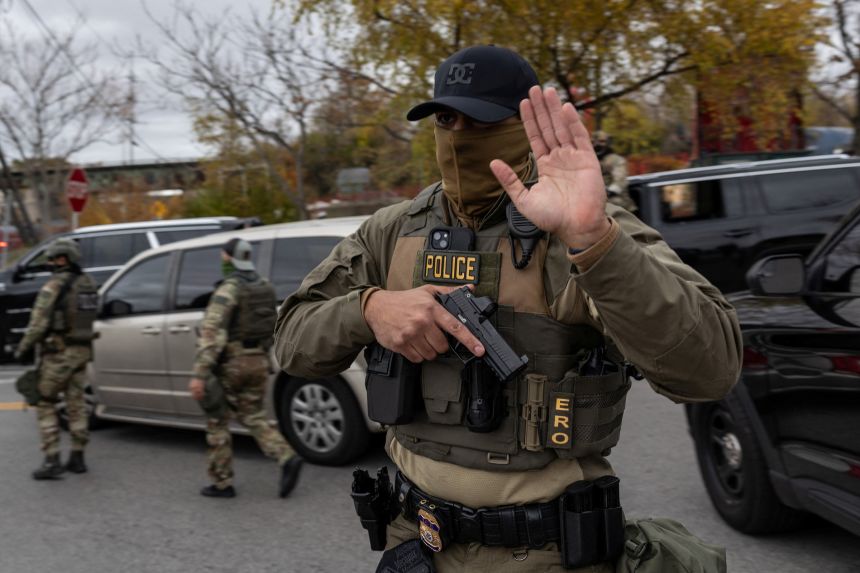
Massachusetts has long been considered one of the most protective states in the country for immigrant communities. With strong sanctuary policies in Boston, Cambridge, and Somerville, and a political culture that has historically resisted cooperation with federal immigration enforcement, the Commonwealth has been viewed as a relatively safer environment for undocumented residents. However, in 2026, community reports submitted through platforms like ICE Spotted reveal that ICE enforcement activity in Massachusetts has escalated significantly — and that federal agents are operating aggressively in communities across the state, regardless of local sanctuary policies.
Massachusetts is home to an estimated 275,000 undocumented immigrants and a much larger foreign-born population of over 1.2 million people. The state's immigrant communities are remarkably diverse, including large populations from Central America, the Caribbean, Brazil, China, Vietnam, Haiti, and West Africa, as well as a historically significant Irish immigrant community. In 2026, ICE operations have been reported in every major population center in the state, from the dense urban neighborhoods of Boston to the post-industrial cities of the Merrimack Valley and Western Massachusetts. This article provides a comprehensive breakdown of enforcement activity by region, the state's evolving sanctuary policy landscape, and the legal resources available to Massachusetts residents.
Boston Metro: East Boston, Chelsea, Everett, and Courthouse Arrests
The greater Boston metropolitan area generates the highest volume of ICE sighting reports in Massachusetts. Boston is one of the most diverse cities in New England, and several of its neighborhoods have large immigrant populations that have become focal points for federal enforcement activity. East Boston — historically an Italian-American neighborhood that has transformed over the past two decades into the largest Latino neighborhood in the city — is the single most reported location for ICE sightings in the state.
Community members in East Boston have submitted numerous reports describing ICE agents conducting operations along Meridian Street, near the Maverick Square MBTA station, and in the residential blocks surrounding the East Boston Neighborhood Health Center. Reports describe unmarked SUVs and sedans with tinted windows conducting slow patrols through residential streets, agents in plainclothes approaching individuals at bus stops, and early-morning operations at apartment buildings between 4:00 AM and 6:00 AM. Several witnesses have reported agents wearing vests marked "POLICE" rather than "ICE," making it difficult for community members to immediately identify them as immigration enforcement.
Community Alert — Boston Courthouse Arrests: Multiple reports confirm that ICE agents have been arresting individuals outside Boston-area courthouses, including at East Boston District Court and Boston Immigration Court. The practice of courthouse arrests has generated significant controversy and legal challenges. If you have a court appearance scheduled, consider having an attorney or community advocate accompany you and be prepared to exercise your right to remain silent.
Chelsea and Everett, two small cities immediately north of Boston with large Central American and Brazilian populations, have also generated a significant number of reports. In Chelsea, community members describe ICE vehicles parked near the Bellingham Square commercial district and agents conducting surveillance outside apartment buildings on Broadway and Washington Avenue. In Everett, reports describe agents near the Encore casino area and in residential neighborhoods along Ferry Street. Somerville, which has adopted its own sanctuary city ordinance, has seen fewer reports than Chelsea or Everett, but community members have still documented ICE vehicles near Union Square and in the Winter Hill neighborhood.
The controversy over courthouse arrests has been particularly intense in Massachusetts. ICE agents have been documented arresting individuals as they enter or exit immigration courts and state district courts in the greater Boston area. Civil liberties organizations and the Massachusetts Trial Court have publicly opposed this practice, arguing that it deters immigrants from accessing the justice system, but federal authorities have continued the practice, stating that courthouses are not designated as sensitive locations exempt from enforcement.
Worcester: Growing Community, Growing Enforcement
Worcester, Massachusetts' second-largest city with a population of approximately 206,000, has experienced a dramatic transformation in its demographics over the past decade. The city's Central American, Vietnamese, Albanian, and African immigrant communities have grown substantially, and Worcester is now one of the most diverse cities in New England. This growth has been accompanied by a noticeable increase in ICE enforcement activity.
Community reports from Worcester in 2026 describe ICE agents conducting surveillance outside the Worcester District Court and the federal immigration court satellite office. Witnesses have reported agents in unmarked vehicles parked near Main South — a neighborhood with a large Latino population — and in the parking lots of grocery stores and check-cashing businesses along Pleasant Street and Chandler Street. Multiple reports describe agents approaching individuals outside the Worcester public library and near bus stops on WRTA routes that serve immigrant-heavy neighborhoods.
Worcester Courthouse Surveillance: Community members have reported ICE agents conducting surveillance outside Worcester District Court and at nearby parking areas. If you have a scheduled court appearance in Worcester, contact a local legal aid organization for guidance. You have the right to remain silent and to ask whether an agent has a judicial warrant signed by a judge.
Worcester does not have its own sanctuary city ordinance, and the city's police department has not adopted a formal policy limiting cooperation with ICE. However, the Worcester Police Department has stated publicly that its officers do not routinely inquire about immigration status during regular policing activities. Community members should be aware that the absence of a formal sanctuary policy means that cooperation between local and federal authorities may occur on a case-by-case basis, and the level of risk associated with any given interaction with local police is less predictable than in cities with codified sanctuary protections.
Springfield and Western Massachusetts: Puerto Rican Community and Holyoke
Springfield, the largest city in Western Massachusetts with a population of approximately 155,000, is home to one of the largest Puerto Rican communities in the Northeast. While Puerto Ricans are U.S. citizens by birth and are not subject to immigration enforcement, the Springfield metropolitan area is also home to significant Dominican, Mexican, and Central American communities that are affected by ICE operations. The broader Western Massachusetts region, including Holyoke, Chicopee, and Northampton, has seen an increase in reported ICE activity in 2026.
Community reports from Springfield describe early-morning raids in the North End and South End neighborhoods, areas with high concentrations of Latino residents. Witnesses report ICE agents arriving in groups of three to four vehicles, wearing tactical vests, and targeting specific residential addresses. Additional reports describe agents conducting surveillance near the Springfield District Court, at the Peter Pan bus station downtown, and in the commercial corridors along State Street and Main Street.
Holyoke, located approximately ten miles north of Springfield, has a Latino population that makes up over half of the city's residents — the highest proportion in Massachusetts. Community reports from Holyoke describe ICE vehicles patrolling High Street and South Summer Street, agents near the Holyoke Transportation Center, and operations at apartment complexes in the Flats neighborhood. The smaller communities of Chicopee and West Springfield have also generated reports of ICE vehicle sightings near factory districts and commercial areas.
Community Alert — Western MA: Reports indicate ICE agents have been approaching individuals near health clinics and social service offices in Springfield and Holyoke. Federal policy designates healthcare facilities as sensitive locations where enforcement should generally be avoided. If you witness enforcement activity near a medical facility, document the time, location, and number of agents and submit a report through ICE Spotted.
Lawrence and the Merrimack Valley: Dominican Community Under Pressure
Lawrence, located in the Merrimack Valley approximately 30 miles north of Boston, has the highest per-capita Latino population of any city in Massachusetts. The city's Dominican community is the largest in the state, and Lawrence has served as a primary destination for Dominican immigrants for decades. In 2026, Lawrence has become one of the most heavily reported locations for ICE activity in Massachusetts.
Community reports from Lawrence describe an intense and sustained enforcement presence. Agents have been reported in the factory district along Canal Street and Merrimack Street, near the Lawrence District Court, in residential neighborhoods along Broadway and Essex Street, and at commercial establishments in the city center. Multiple reports describe ICE agents approaching workers at textile and manufacturing facilities — industries that employ a significant portion of Lawrence's immigrant workforce. Witnesses describe agents waiting near factory parking lots during shift changes and following workers to their vehicles.
The neighboring cities of Lowell, Haverhill, and Methuen have also generated reports. Lowell, which has large Cambodian, Latino, and African immigrant communities, has seen reports of ICE activity near the Lowell District Court and in the Acre neighborhood. Methuen, which borders Lawrence, has experienced spillover enforcement activity, with community members reporting ICE vehicles in residential areas near the Lawrence city line. The Merrimack Valley as a whole has experienced a higher density of enforcement activity relative to its population than almost any other region in the state.
Additionally, the nearby city of Brockton, located south of Boston, has generated multiple reports of unmarked ICE vans operating in residential neighborhoods. Community members in Brockton describe groups of two to three unmarked white vans with tinted windows conducting coordinated operations in neighborhoods with large Haitian, Cape Verdean, and Central American populations. Reports from the downtown area and along Main Street describe agents approaching individuals outside of small businesses and at bus stops.
Massachusetts Sanctuary Policies: Strong Locally, Incomplete Statewide
Massachusetts has some of the strongest local sanctuary protections in the country, but it does not have a comprehensive statewide sanctuary law comparable to California's SB 54 or Illinois's TRUST Act. The Safe Communities Act, which would create statewide limits on cooperation between local law enforcement and ICE, has been introduced in the Massachusetts legislature multiple times but has not been enacted as of early 2026. The bill would prohibit state and local law enforcement from honoring ICE detainer requests without a judicial warrant, bar officers from asking about immigration status, and restrict the use of state resources for federal immigration enforcement.
In the absence of statewide legislation, protections for immigrants in Massachusetts vary by municipality. The City of Boston adopted the Boston Trust Act in 2014, which prohibits Boston police from detaining individuals solely on the basis of an ICE detainer request unless accompanied by a judicial warrant. Cambridge, Somerville, Northampton, and Amherst have adopted similar sanctuary ordinances. However, many other Massachusetts cities and towns — including Worcester, Springfield, Lawrence, and Brockton — do not have formal sanctuary policies, creating an uneven landscape of protections across the state.
Know Your City's Policy: Sanctuary protections vary widely across Massachusetts. Before any interaction with local police, it is helpful to know whether your city or town has adopted a sanctuary ordinance or a policy limiting cooperation with ICE. Organizations like MIRA (Massachusetts Immigrant and Refugee Advocacy Coalition) maintain updated information about local policies across the state.
The Massachusetts Trust Act, signed into law in a more limited form, provides some baseline protections by restricting when state agencies can share information with federal immigration authorities. However, advocates argue that the Trust Act does not go far enough and that comprehensive statewide legislation is needed to ensure that all Massachusetts residents, regardless of which city or town they live in, receive consistent protection from entanglement between local policing and immigration enforcement.
How to Report ICE Sightings in Massachusetts
If you witness ICE enforcement activity anywhere in Massachusetts, submitting a timely report helps your community stay informed and creates a record of enforcement patterns across the state. When documenting a sighting, include as much detail as possible:
- Location: City, neighborhood, cross streets, or nearby landmarks. Note whether you are in Greater Boston, Central Mass, Western Mass, or the Merrimack Valley.
- Time: When you observed the activity, including whether agents appeared to be arriving, actively conducting an operation, or departing.
- Vehicles: Number, type (van, SUV, sedan), color, and whether they had government plates or visible markings.
- Agents: Number of agents visible, what they were wearing (tactical gear, plainclothes, vests with markings), and what they appeared to be doing.
- Courthouse activity: If you observed agents near a courthouse, note the specific court and describe what you saw.
You can submit a report using the anonymous form below or through the ICE Spotted homepage. All reports are anonymous — no IP address, name, or identifying information is collected.
Legal Resources for Massachusetts Residents
Massachusetts has a strong network of organizations providing legal assistance and advocacy for immigrants facing enforcement actions. Key resources include:
- Massachusetts Immigrant and Refugee Advocacy Coalition (MIRA): The state's largest immigrant advocacy organization, MIRA coordinates rapid response efforts, provides policy updates, and maintains a directory of immigration legal service providers across Massachusetts.
- Political Asylum/Immigration Representation Project (PAIR): Provides free legal representation to detained immigrants and asylum seekers in New England. PAIR operates a legal hotline and can assist individuals who have been arrested or detained by ICE.
- Centro Presente: Based in East Boston and Somerville, Centro Presente is a Latino immigrant-led organization that provides Know Your Rights trainings, community organizing support, and direct assistance to individuals facing enforcement actions.
- Irish International Immigrant Center (IIIC): Despite its name, IIIC serves immigrants of all nationalities and provides free immigration legal services, including representation in deportation proceedings, through its legal services program in downtown Boston.
Remember: Regardless of your immigration status, you have constitutional rights in Massachusetts. You have the right to remain silent, the right to refuse consent to a search, and the right to ask whether agents have a judicial warrant signed by a judge. You are not required to open your door to ICE agents unless they present a warrant signed by a federal judge — not an administrative warrant signed by an ICE official.
ICE Activity Map: Massachusetts Reports
The map below shows recent community-reported ICE activity across Massachusetts. Red markers indicate reported sightings, checkpoints, and enforcement operations in key regions of the state.