 ICE Spotted
ICE Activity in New Jersey 2026: Community Reports and Enforcement Hotspots
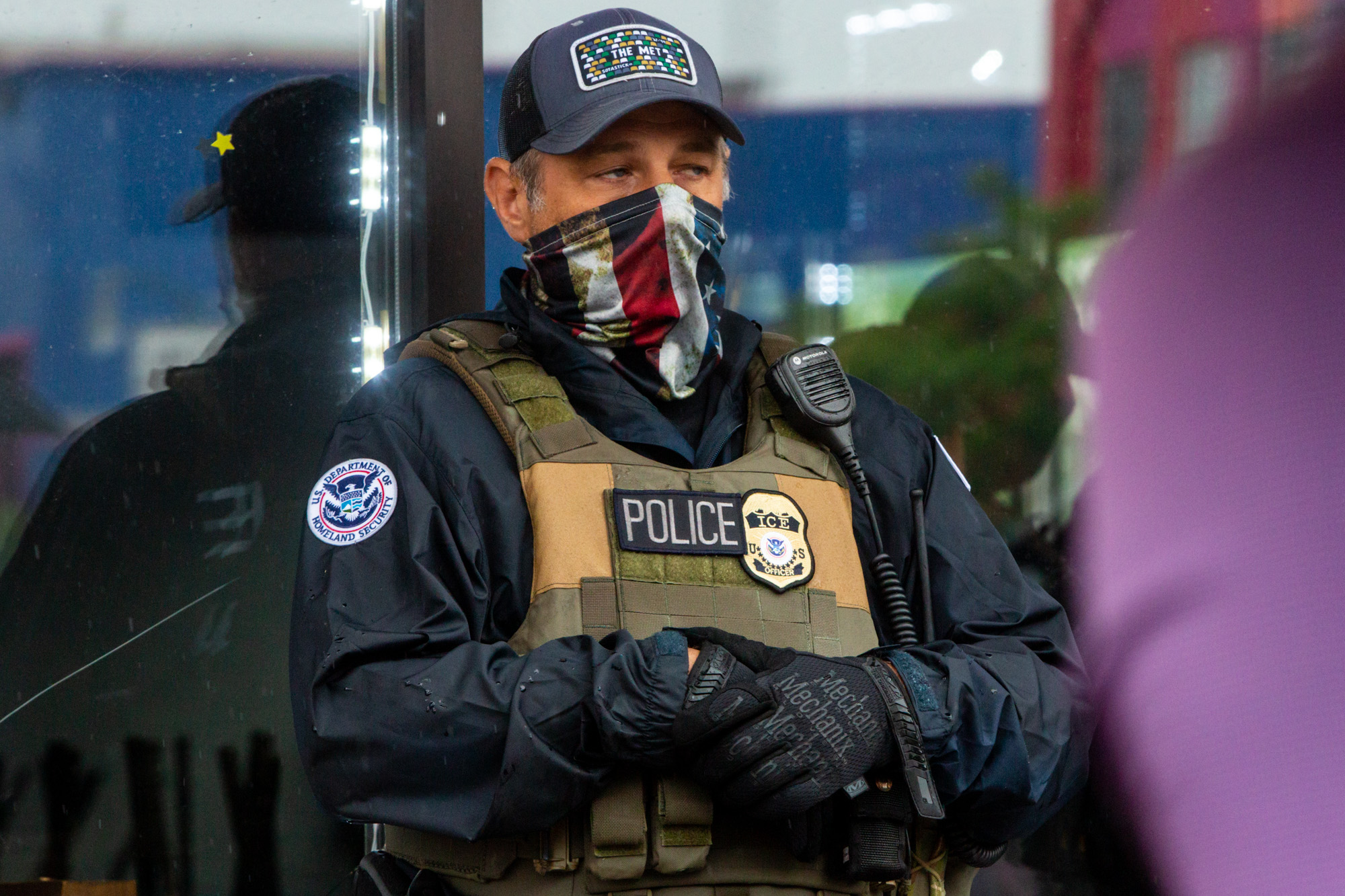
New Jersey sits at a unique crossroads in the national immigration enforcement debate. The state is home to nearly two million foreign-born residents — one of the highest immigrant populations per capita in the country — and its proximity to New York City means that ICE field offices in both Newark and New York coordinate operations that span the metropolitan region. In 2026, community reports submitted through ICE Spotted reveal that immigration enforcement activity in New Jersey has intensified dramatically, creating tension between the state's official policy of limiting local cooperation with ICE and the federal government's determination to expand enforcement operations in communities across the Garden State.
This article provides a comprehensive, region-by-region breakdown of where ICE operations are being reported in New Jersey, how the state's Immigrant Trust Directive is functioning in practice, and what legal resources are available to residents who encounter federal agents in their neighborhoods, workplaces, transit stations, and public spaces.
Newark and Essex County: The Ironbound District and Penn Station
Newark, New Jersey's largest city, generates more ICE sighting reports than any other municipality in the state. The city's Ironbound district — a densely packed neighborhood east of Penn Station known for its Portuguese, Brazilian, Ecuadorian, and Central American communities — has been a particular focal point for enforcement activity. Community members have reported seeing ICE agents in unmarked vehicles parked along Ferry Street, the district's commercial spine, and near the intersections of Lafayette Street and Market Street during early morning hours.
Newark Penn Station, one of the busiest transit hubs in the region, has generated a steady stream of reports from commuters and community members who describe agents in plainclothes stationed near entrances and on platforms. Multiple reports describe agents approaching individuals and asking for identification — a practice that immigration attorneys say is constitutionally problematic absent reasonable suspicion of a specific violation. The station's role as a major NJ Transit, Amtrak, and PATH hub means that hundreds of thousands of people pass through daily, making it a high-visibility location for federal enforcement presence.
Know Your Rights at Transit Stations: ICE agents at transit hubs like Newark Penn Station may ask you questions, but you are not required to answer. You have the right to remain silent, and you do not have to show identification to federal agents unless they have a warrant. If an agent approaches you, you can calmly ask "Am I free to go?" and if the answer is yes, walk away without further conversation.
Beyond the Ironbound and Penn Station, reports from across Newark describe operations in the South Ward — particularly in neighborhoods along Clinton Avenue and South Orange Avenue — and in the North Ward's Portuguese and Latino communities along Bloomfield Avenue. ICE agents have also been reported near the Essex County courthouse complex and outside immigration legal service offices in the downtown area, a pattern that advocacy organizations say is designed to intimidate individuals seeking legal help.
Paterson and Passaic County: A Diverse Immigrant Community Under Pressure
Paterson, New Jersey's third-largest city, is one of the most ethnically diverse small cities in the United States. Its population includes significant Turkish, Arab, Dominican, Mexican, Peruvian, and Bangladeshi communities, many of which have deep roots in the city stretching back decades. The city's dense residential neighborhoods, centered around neighborhoods like South Paterson, the Fourth Ward, and the area around Main Street, have been the subject of numerous ICE sighting reports in 2026.
Community reports from Paterson describe a pattern of early-morning raids — operations conducted between 4:00 AM and 6:00 AM at specific residential addresses. Witnesses describe convoys of three to six unmarked vehicles, typically dark-colored SUVs and vans, arriving at apartment buildings and multi-family homes. Agents are reported to knock aggressively on doors and, in some cases, to identify themselves as "police" rather than as ICE agents — a practice that has been documented nationally and that advocacy organizations argue is deliberately deceptive.
Community Alert: Multiple reports from Paterson indicate that ICE agents have identified themselves as "police" during early-morning operations. Remember: you have the right to ask agents to identify their agency and to show a judicial warrant before opening your door. An administrative warrant (Form I-200) signed by an ICE officer does not give agents the legal authority to enter your home without your consent.
Passaic County more broadly has seen reports from Clifton, Passaic City, and Haledon. The area around Passaic City's Main Avenue, a commercial strip with numerous immigrant-owned businesses, has generated reports of agents conducting surveillance from parked vehicles. Community members in Clifton have reported agents near the Botany Village neighborhood and around shopping centers along Route 46 that serve immigrant communities.
Elizabeth and Union County: Factory Districts and Airport Proximity
Elizabeth, located in Union County just south of Newark, is a city where the immigrant population comprises a majority of residents. The city's factory district, located in the industrial areas south of the New Jersey Turnpike near Elizabeth's port facilities, has been the subject of multiple enforcement reports. Community members describe ICE vehicles stationed near warehouse and manufacturing entrances during shift changes, and agents approaching workers in parking lots adjacent to industrial buildings along North Avenue and Spring Street.
Elizabeth's proximity to Newark Liberty International Airport adds another dimension to enforcement patterns in the area. Community reports indicate that ICE agents operate in coordination with Customs and Border Protection at the airport and sometimes extend operations into surrounding neighborhoods. The area around Elizabeth's Midtown train station, which serves as a transit connection point for airport workers and commuters, has also been flagged in community reports as a location where agents have been observed.
Across Union County, additional reports have come from Plainfield, where a large Central American community resides, and from Linden, where immigrant workers are employed in the petrochemical and logistics industries that line the Turnpike corridor. In these communities, reports describe agents operating both at workplaces and in residential areas, suggesting coordinated enforcement strategies targeting both where immigrant workers live and where they are employed.
Hudson County: Jersey City, Union City, and the Gold Coast
Hudson County, located directly across the Hudson River from Manhattan, is one of the most densely populated and ethnically diverse counties in the United States. Jersey City, the county seat, has a population that includes large South Asian, Filipino, Arab, and Latino communities. Union City, just to the north, has historically had the highest concentration of Cuban Americans outside of Miami and continues to be a hub for immigrant families from across Latin America.
Community reports from Jersey City describe ICE activity near the Journal Square Transportation Center and along the commercial corridors of Kennedy Boulevard and Newark Avenue. The Journal Square area, which serves as a major PATH station connecting to Manhattan, has been the subject of reports describing agents stationed near transit entrances. In the Heights neighborhood of Jersey City, along Palisade Avenue and Central Avenue, community members have reported unmarked vehicles conducting slow patrols through residential blocks.
Union City and West New York, which together form one of the most densely packed immigrant communities in the state, have generated reports of ICE operations in residential areas along Bergenline Avenue and Park Avenue. The concentration of multi-family housing in these communities means that enforcement actions at a single address can affect dozens of families who live in adjacent units and share common spaces. Community organizations in Hudson County report that fear of ICE has led to a measurable decrease in residents accessing public services, including health clinics and schools.
Central New Jersey: New Brunswick, Perth Amboy, and the Rutgers Corridor
Central New Jersey — particularly Middlesex County — has become an increasingly active zone for ICE enforcement. New Brunswick, home to Rutgers University, has a significant Latino community concentrated in neighborhoods near the downtown area and along French Street and Livingston Avenue. Community reports describe agents operating near the Middlesex County courthouse and in residential areas within walking distance of the Rutgers campus. The presence of enforcement activity near a major university has raised particular concern among students and faculty, including undocumented students protected under DACA.
Perth Amboy, a small city on the Raritan Bay with a population that is majority Latino, has generated some of the most frequent ICE sighting reports in Central New Jersey. Community members describe a near-constant presence of federal enforcement vehicles in the city, with reports concentrated around the downtown commercial district, near St. Peter's Hospital, and in the residential neighborhoods along State Street and Market Street. The scale of enforcement activity reported in Perth Amboy relative to the city's small size has made it one of the most intensely policed immigrant communities in the state.
Sensitive Locations Policy: Federal policy has historically limited ICE enforcement actions at or near schools, hospitals, churches, and other sensitive locations. While the scope of this policy has changed over time, if you witness ICE activity near a school, hospital, or house of worship, document the details and report it. This information is critical for advocacy organizations monitoring federal compliance with their own guidelines.
New Jersey's Immigrant Trust Directive: Policy vs. Practice
New Jersey's Immigrant Trust Directive, issued by the state's Attorney General, limits how state and local law enforcement agencies can cooperate with federal immigration authorities. Under the directive, local police and county jails are generally prohibited from honoring ICE detainer requests, providing ICE agents with access to individuals in local custody, or allowing ICE agents to use local jail facilities for immigration enforcement purposes. The directive also prohibits local officers from asking about immigration status during routine encounters.
In practice, however, the directive's effectiveness varies across the state. Some counties and municipalities have embraced the directive and implemented clear policies to ensure compliance. Others have resisted, with some sheriffs and county officials publicly expressing their disagreement with the policy and seeking ways to cooperate with ICE within the directive's limitations. The Bergen County Jail, which previously held ICE detainees under a contract with the federal government, became a flashpoint in this debate and has been the subject of ongoing legal and political battles over the county's relationship with federal immigration enforcement.
It is important for New Jersey residents to understand that the Immigrant Trust Directive limits local law enforcement cooperation but does not prevent ICE from operating independently within the state. Federal agents have full authority to conduct enforcement operations anywhere in New Jersey, and they frequently do so without the knowledge or assistance of local police departments. The directive provides a layer of protection by preventing local officers from becoming extensions of federal enforcement, but it cannot shield communities from direct federal operations.
How to Report ICE Sightings in New Jersey
If you witness ICE enforcement activity anywhere in New Jersey, submitting a timely report helps your community stay informed and enables legal organizations to identify patterns of enforcement that may violate policy or constitutional rights. When documenting a sighting, include as much detail as possible:
- Location: City, cross streets, or nearby landmarks. Note whether the activity was near a train station, courthouse, workplace, or residential area.
- Time: When you observed the activity, including whether it was an early-morning operation, rush hour, or daytime enforcement.
- Vehicles: Number, type (van, SUV, sedan), color, and whether they had government plates or visible markings.
- Agents: Number of agents visible, what they were wearing, and how they identified themselves.
- Other agencies: Whether local police or other law enforcement appeared to be involved — this is especially important for monitoring Immigrant Trust Directive compliance.
You can submit a report using the anonymous form below or through the ICE Spotted homepage. All reports are anonymous — no IP address, name, or identifying information is collected.
Legal Resources for New Jersey Residents
New Jersey has a robust network of legal organizations that provide services to immigrants facing enforcement actions. Key resources include:
- American Friends Service Committee - NJ: Provides immigrant rights education, rapid response coordination, and legal referral services across northern and central New Jersey.
- Make the Road New Jersey: A community organization based in Elizabeth and Passaic County that provides know-your-rights training, legal clinics, and community defense planning for immigrant families.
- Wind of the Spirit: A Morristown-based immigrant advocacy organization that operates a legal services program, community hotline, and rapid response network covering Morris, Sussex, and Warren counties.
- NJ Alliance for Immigrant Justice: A statewide coalition that coordinates immigrant defense networks, monitors enforcement patterns, and advocates for stronger protections at the state and local level.
Remember: Regardless of your immigration status, you have constitutional rights in New Jersey. You have the right to remain silent, the right to refuse consent to a search, and the right to ask whether agents have a judicial warrant signed by a judge. You are not required to open your door to ICE agents unless they present a warrant signed by a federal judge — not an administrative warrant issued by ICE itself.
ICE Activity Map: New Jersey Reports
The map below shows recent community-reported ICE activity across New Jersey. Red markers indicate reported sightings, checkpoints, and enforcement operations in Newark, Paterson, Elizabeth, Jersey City, and surrounding areas.