 ICE Spotted
ICE Activity in Colorado 2026: Community Reports and Enforcement Hotspots
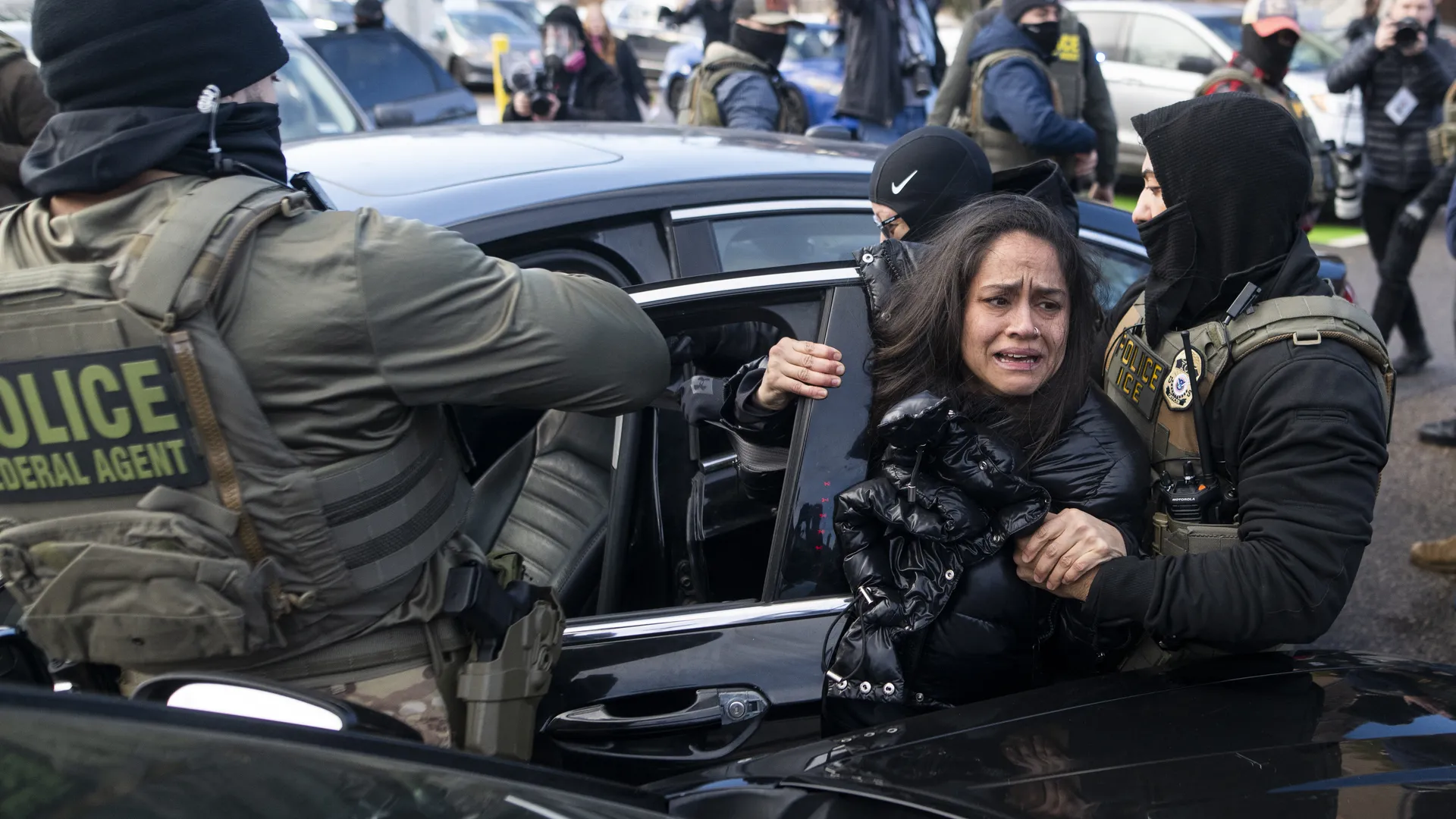
Colorado presents one of the starkest contrasts in immigration enforcement policy of any state in the country. The state is home to an estimated 550,000 foreign-born residents, with the majority concentrated in the Denver metropolitan area, the northern Front Range corridor, and agricultural communities across the eastern plains. While Denver has maintained a sanctuary city policy for decades and the state legislature passed HB 19-1124 to limit local cooperation with ICE, several Colorado counties have moved aggressively in the opposite direction — actively seeking out partnerships with federal immigration enforcement and publicly declaring their intent to assist ICE operations. In 2026, community reports submitted through ICE Spotted reveal how this policy divide is playing out on the ground, with dramatically different enforcement experiences depending on which side of a county line you happen to live.
This article provides a detailed region-by-region breakdown of where ICE operations are being reported across Colorado, how the state's fractured legal landscape affects enforcement patterns, and what resources are available to residents who encounter federal agents in their communities.
Denver Metro Area: Federal Boulevard, Westwood, and Beyond
Denver generates the highest volume of ICE sighting reports in Colorado, with enforcement activity concentrated in neighborhoods along the Federal Boulevard corridor and in historically Latino communities on the city's west side. The Westwood neighborhood, bounded roughly by Federal Boulevard, Alameda Avenue, Sheridan Boulevard, and Mississippi Avenue, has been a particular focal point for reported activity. Community members describe ICE vehicles — typically unmarked dark SUVs with government plates — conducting slow patrols through residential streets, parking near apartment complexes, and conducting targeted operations at specific addresses during early morning hours.
The Sun Valley neighborhood, one of Denver's most economically disadvantaged areas and home to a significant refugee and immigrant population, has also generated multiple reports. Residents describe agents operating near the Sun Valley public housing complex and in the surrounding streets. The Globeville-Elyria-Swansea neighborhoods north of downtown, which sit in the shadow of the National Western Complex and major highway interchanges, have reported ICE activity near churches, community centers, and the small businesses that line Brighton Boulevard and Washington Street.
Denver Sanctuary Policy: Denver has maintained a sanctuary city policy since 2017 that prohibits city employees, including Denver Police officers, from asking about immigration status or cooperating with ICE detainer requests. However, this policy does not prevent federal agents from operating independently within Denver city limits. ICE maintains a field office in the Denver metro area and conducts enforcement operations throughout the city regardless of the sanctuary designation.
Along Federal Boulevard — the main commercial artery serving Denver's Latino community — reports describe agents in plainclothes entering businesses, observing customers in parking lots, and conducting vehicle stops that community members believe are pretextual. The corridor between West Alameda Avenue and West 52nd Avenue along Federal has been the subject of more ICE sighting reports than any other single street in Colorado. Community organizations working in the area report that the visible ICE presence has driven many immigrant residents to avoid shopping, dining, and accessing services along Federal Boulevard, devastating the small businesses that have served the community for decades.
Aurora: Large Immigrant Community, Aggressive Local Enforcement
Aurora, Colorado's third-largest city and Denver's immediate eastern neighbor, has become one of the most contentious battlegrounds for immigration enforcement in the state. The city is home to a large and diverse immigrant population that includes significant communities of refugees from East Africa, Southeast Asia, and Latin America. In recent years, Aurora has also attracted national attention for its aggressive approach to immigration enforcement, with city and county officials publicly expressing support for ICE operations and seeking to facilitate federal enforcement within city boundaries.
Community reports from Aurora describe a pattern of enforcement activity centered around the Arapahoe County courthouse, where agents have been observed conducting surveillance and approaching individuals in the courthouse parking structure and on the surrounding sidewalks. Multiple reports describe agents waiting in vehicles near the courthouse entrance and following individuals who exit after court appearances. Immigration attorneys working in Arapahoe County have publicly protested this practice, arguing that it deters individuals from appearing for court dates and accessing the legal system.
Community Alert: Community organizations in Aurora report that ICE agents have been conducting surveillance outside the Arapahoe County courthouse and approaching individuals on courthouse grounds. If you have a court appearance, you have the right to attend without fear of arrest in the courthouse itself. Consider having a family member or friend accompany you, bring your attorney's contact information, and know your rights before you arrive. Contact the Rocky Mountain Immigrant Advocacy Network for guidance.
Beyond the courthouse, Aurora community reports describe enforcement activity in residential neighborhoods along Colfax Avenue, Havana Street, and the area surrounding the Aurora Town Center. The refugee communities concentrated in apartment complexes along East Iliff Avenue and South Peoria Street have reported ICE vehicles stationed near their housing during early morning and evening hours. Reports also describe agents approaching individuals at bus stops along the RTD route 15 line on Colfax, one of the busiest transit corridors in the metro area. The combination of a large immigrant population and a local government that has signaled its willingness to cooperate with federal enforcement has made Aurora a uniquely challenging environment for immigrant families.
Greeley and Weld County: Meatpacking Industry and Active ICE Cooperation
Weld County, located on the northern Front Range approximately 50 miles north of Denver, represents one of the most aggressive examples of local-federal immigration enforcement cooperation in Colorado. The county's economy is heavily dependent on the meatpacking industry, with major processing plants in Greeley operated by JBS and other large companies that employ thousands of immigrant workers. Despite this economic reliance on immigrant labor, Weld County has been among the most vocal jurisdictions in the state in its support for ICE operations and its opposition to state laws limiting local cooperation.
Community reports from Greeley describe a persistent ICE presence in the neighborhoods surrounding meatpacking plants, particularly along the 8th Avenue corridor and in the residential areas east of downtown. Agents have been reported stationed near plant entrances during shift changes, in parking lots of grocery stores and dollar stores that serve immigrant communities, and in mobile home parks where many plant workers and their families live. The scale of the immigrant workforce in Greeley's meatpacking industry — estimated at several thousand workers — means that enforcement activity in this area affects a significant portion of the city's population.
Reports from across Weld County also describe enforcement activity in smaller communities including Evans, LaSalle, and Fort Lupton, where agricultural workers are employed in the dairy, feedlot, and row crop industries that dominate the county's rural economy. In these smaller towns, ICE operations are particularly visible and disruptive, as there are few places where residents can go without encountering the same vehicles and agents. Community members describe a pervasive atmosphere of fear that extends beyond the individuals targeted by enforcement to encompass entire neighborhoods and workforces.
Weld County Context: Weld County Sheriff Steve Reams has been one of the most outspoken opponents of Colorado's HB 19-1124, which limits local cooperation with ICE. The sheriff's office has publicly stated its commitment to working with federal immigration enforcement to the maximum extent it believes is legally permissible. If you are in Weld County, be aware that local law enforcement may be more likely to share information with ICE than in other parts of the state.
Colorado Springs: Military Town, Different Enforcement Patterns
Colorado Springs, the state's second-largest city and home to multiple military installations including Fort Carson, Peterson Space Force Base, and the United States Air Force Academy, presents a different enforcement pattern than other Colorado cities. The city's large military population and generally conservative political orientation create an environment where federal enforcement agencies operate with relatively little public opposition, and community reports suggest that ICE activity in Colorado Springs tends to be more overt than in Denver.
Community reports from Colorado Springs describe enforcement activity concentrated along South Academy Boulevard and in the neighborhoods south of downtown near the intersection of South Nevada Avenue and Interstate 25. The Southeastern part of the city, which has a higher concentration of immigrant families than other areas of Colorado Springs, has generated reports of agents conducting both residential operations and checkpoint-style stops near major intersections. Additional reports describe ICE vehicles near the El Paso County courthouse and in the parking areas surrounding social services offices where immigrant residents access public benefits.
The surrounding areas of El Paso County and neighboring Teller County have also generated enforcement reports. Teller County, a rural county west of Colorado Springs, has been identified by community organizations as another jurisdiction that actively cooperates with ICE. Reports from the town of Woodland Park describe ICE agents conducting operations that appear to be coordinated with local law enforcement, a pattern that is rare in more urban parts of the state but common in Colorado's rural and exurban counties where sheriffs have expressed support for federal immigration enforcement.
Colorado's Legal Landscape: HB 19-1124, Denver Sanctuary Policy, and County Resistance
Colorado's immigration enforcement landscape is defined by a fundamental tension between state and local policies. At the state level, HB 19-1124, signed into law in 2019, prohibits local law enforcement agencies from detaining individuals solely on the basis of an ICE detainer request and limits the circumstances under which local agencies can notify ICE about individuals in their custody. The law was designed to create a baseline level of protection for immigrant communities across the state, regardless of local political dynamics.
Denver's sanctuary city policy goes further than the state law, broadly prohibiting city employees from assisting with federal immigration enforcement. The city has also allocated resources to immigrant legal defense programs, community navigator services, and rapid response networks that deploy when ICE activity is reported in city neighborhoods. Boulder, Lakewood, and several other Front Range cities have adopted similar, though generally less comprehensive, protective policies.
However, numerous Colorado counties have pushed back forcefully against both the state law and the broader concept of limiting local cooperation with ICE. Weld County, Teller County, El Paso County, and several other jurisdictions have publicly stated their opposition to HB 19-1124 and have sought ways to cooperate with ICE within — and in some cases arguably beyond — the legal limits established by the state law. This patchwork of enforcement approaches means that immigrant communities in Colorado face radically different levels of protection depending on where they live, creating a geography of vulnerability that closely mirrors the state's political map.
For Colorado residents, understanding the enforcement posture of your specific county is critical. The difference between living in Denver, where local police will not assist ICE, and living in Weld County, where the sheriff's office actively seeks to cooperate with federal enforcement, is not just theoretical — it fundamentally changes the risks that immigrant individuals and families face in their daily lives.
How to Report ICE Sightings in Colorado
If you witness ICE enforcement activity anywhere in Colorado, submitting a timely report helps your community stay informed and enables legal organizations to identify enforcement patterns that may cross legal boundaries. When documenting a sighting, include as much detail as possible:
- Location: City, cross streets, or nearby landmarks. Note whether the activity was near a courthouse, workplace, transit stop, or residential area.
- Time: When you observed the activity, including whether it was an early-morning operation or daytime enforcement.
- Vehicles: Number, type (van, SUV, sedan), color, and whether they had government plates or visible markings.
- Agents: Number of agents visible, what they were wearing (tactical gear, plainclothes, vests with markings), and what they appeared to be doing.
- Local police involvement: Whether local police or sheriff's deputies appeared to be involved — this is especially important for monitoring HB 19-1124 compliance.
You can submit a report using the anonymous form below or through the ICE Spotted homepage. All reports are anonymous — no IP address, name, or identifying information is collected.
Legal Resources for Colorado Residents
Colorado has a growing network of legal organizations that provide services to immigrants facing enforcement actions. Key resources include:
- Rocky Mountain Immigrant Advocacy Network (RMIAN): Provides free legal services to immigrants in detention and those facing removal proceedings. RMIAN operates the Immigration Court Helpdesk at the Denver Immigration Court and provides legal representation for detained individuals.
- Colorado Immigrant Rights Coalition (CIRC): A statewide coalition that coordinates community defense networks, provides know-your-rights training, operates a rapid response hotline, and advocates for policy changes at the state and local level.
- Together Colorado: A faith-based organization that mobilizes congregations across the state to support immigrant families, provides sanctuary accompaniment programs, and coordinates community response to ICE enforcement activity.
- ACLU of Colorado: Monitors immigration enforcement practices, litigates cases involving rights violations during ICE operations, and provides public education on constitutional rights during encounters with federal agents.
Remember: Regardless of your immigration status, you have constitutional rights in Colorado. You have the right to remain silent, the right to refuse consent to a search, and the right to ask whether agents have a judicial warrant signed by a judge. You are not required to open your door to ICE agents unless they present a warrant signed by a federal judge — not an administrative warrant (Form I-200) issued by ICE itself.
ICE Activity Map: Colorado Reports
The map below shows recent community-reported ICE activity across Colorado. Red markers indicate reported sightings, checkpoints, and enforcement operations in Denver, Aurora, Colorado Springs, Greeley, and surrounding areas.