 ICE Spotted
ICE Agents Broke Into a Queens Home Searching for Someone
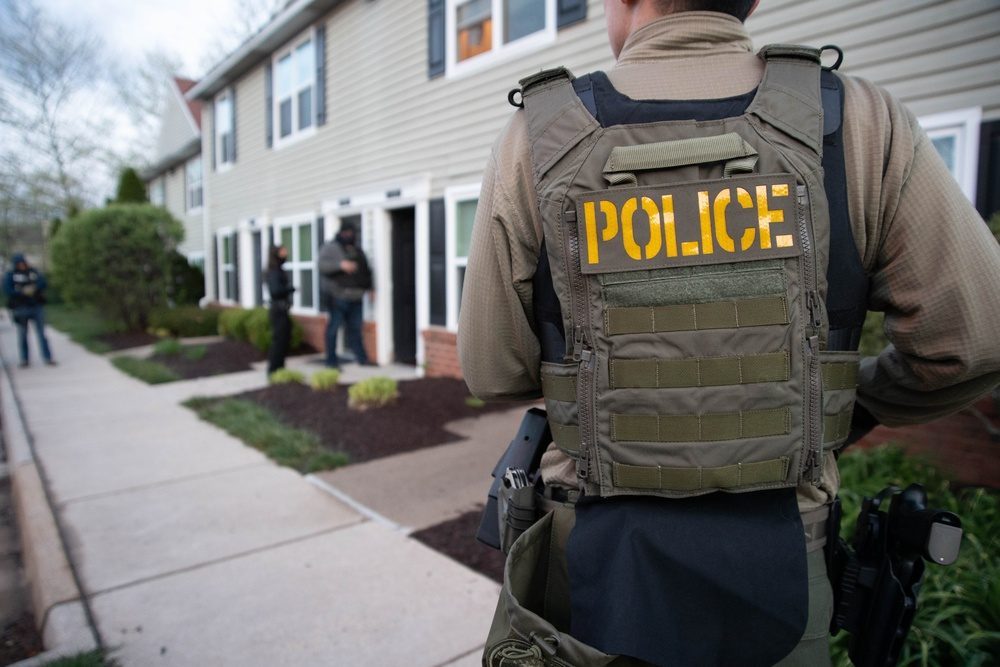
Summary: On November 13, 2025, ICE agents broke into a Queens home searching for someone who did not live there, pointing guns at a mother and her four children during a pre-dawn raid in Elmhurst. The incident, captured on surveillance video, drew national attention and condemnation from immigrant advocacy organizations, elected officials, and community members across New York City.
ICE agents broke into a Queens home searching for someone who had not lived at the address for years — and in the process, pointed firearms at a 33-year-old mother and her four young children, including a breastfeeding infant. The pre-dawn raid on November 13, 2025, at a basement apartment in Elmhurst, Queens, was one of the most heavily documented ICE enforcement actions of the year, captured on the family's own surveillance cameras and later corroborated by multiple news organizations. The incident ignited a firestorm of criticism from immigrant advocacy groups, elected officials, and communities across New York City, and raised urgent legal questions about the limits of federal immigration enforcement inside private homes.
Important: If ICE agents come to your door, you have constitutional rights regardless of your immigration status. Read our full guide: What to Do If ICE Comes to Your Door.
What Happened on November 13, 2025
At approximately 5:30 a.m. on Thursday, November 13, 2025, armed federal agents arrived at a basement apartment in Elmhurst, Queens, according to the New York Immigration Coalition (NYIC). The agents were searching for Raymundo Gabriel Huerra-Betancourt, a cousin of the woman living at the address — a person who had not resided there for years.
Jennifer, the 33-year-old mother who lived in the apartment (last name withheld for her safety), told NY1 that she was in bed breastfeeding her infant when agents entered her bedroom. Her three other children — ages 6, 10, and 13 — were also asleep in the home. Her husband was at work at the time of the raid.
According to Jennifer's account, an agent entered the bedroom, snatched the phone from her hands, threw it off the bed, and then grabbed her by her hair and dragged her to the kitchen. "He said, 'Come here, come here!' I told him, 'Wait, I'm going to move my child,'" Jennifer told NY1. "That's when he gets close to the bed and snatches my phone and throws it off the bed. And that's when he grabs me by my hair and takes me to the kitchen of my home."
The agents reportedly questioned Jennifer for approximately one hour about her cousin's whereabouts before leaving without making any arrests. "They were anxious for me to tell them where they could find him. I told them I don't know," Jennifer recounted. The THE CITY reported that surveillance footage confirmed the agents' presence and their actions inside the home.
Who Were ICE Agents Searching For?
The target of the raid was Raymundo Gabriel Huerra-Betancourt, Jennifer's cousin. According to a statement from the Department of Homeland Security reported by Fox 5 NY and NY1, Huerra-Betancourt had a criminal history that included charges for assault, reckless driving, and illegal re-entry into the United States. DHS stated that the address listed on Huerra-Betancourt's probation form was Jennifer's apartment, and the address was also associated with his Social Security number and phone records.
However, Jennifer told reporters that her cousin had not lived at the address for years. The agents left without finding Huerra-Betancourt and without making any arrests at the residence. The family was not the target of any immigration enforcement action — they were simply living at an address that federal databases had linked to someone else.
What the Surveillance Video Shows
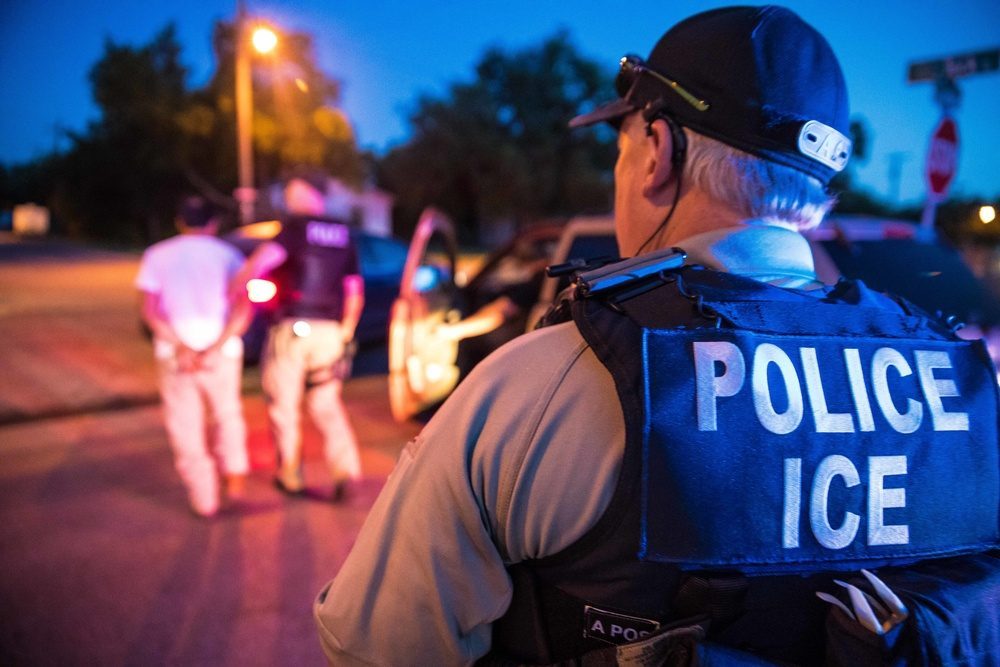
The incident was captured by the family's home surveillance cameras, and the footage was widely reported by THE CITY, amNewYork, and other outlets. The video showed agents in tactical gear — wearing assault rifles, helmets, and body armor — entering the basement apartment. One agent carried a riot shield marked "U.S. Marshal," while another wore a neck gaiter with the letters "ICE" printed on it.
The footage also captured an agent reaching toward the family's outdoor security camera and turning it away, an action that raised questions about whether agents were attempting to prevent documentation of the operation. Inside the apartment, the camera recorded the mother's desperate plea as agents entered her bedroom: "I have my baby, no!" According to THE CITY's reporting, an agent responded: "Then I'm coming to get you by your baby."
Newsweek reported that agents also told the family, "Put your hands up, stupid" during the confrontation. The NYPD later responded to the scene after neighbors who heard the commotion called 911, believing a burglary was in progress. Home security footage showed police officers briefly speaking with ICE agents before leaving the scene.
DHS Official Response vs. the Family's Account
The Department of Homeland Security issued a statement disputing several key elements of the family's account. According to DHS, as reported by NY1 and Fox 5 NY:
- ICE and U.S. Marshals Service were executing a criminal arrest warrant for Huerra-Betancourt
- Officers "approached the residence and knocked on the door for approximately 20 minutes, attempting to gain voluntary cooperation to enter the residence"
- "When no response was received, officers used their training and lawfully entered the home"
- Officers "safely guided her and the children to the kitchen for their safety while they searched for the criminal target"
- DHS called allegations that agents threatened the woman and her children with firearms "false"
Jennifer's account directly contradicts the DHS narrative on several points. She stated that agents forced entry without knocking or announcing themselves, that guns were pointed at her and her children, and that she was physically dragged by her hair — not "safely guided" — to the kitchen. The NYIC also disputed DHS's version, noting that the surveillance video evidence supported the family's account. The fact that neighbors called the police believing a burglary was in progress further suggests the entry was sudden and alarming, contradicting claims of a 20-minute knock.
The Impact on Jennifer's Family
The raid left lasting trauma on the family, particularly the children. In her interview with NY1, Jennifer described the immediate and ongoing consequences:
"The first thing that came to my mind was that they are going to take me."
— Jennifer, speaking to NY1 on November 20, 2025
The children had not returned to school in the days following the raid. "They have a lot of fear. They haven't gone to school since this happened. They don't want to separate themselves from me," Jennifer said. The family moved to a hotel, afraid that agents would follow through on their threat to return.
"My husband feels guilty because he wasn't able to defend me. He wasn't there."
— Jennifer, describing her husband's reaction
Jennifer told reporters that her life had "changed completely" since the raid. The psychological impact on her children — who witnessed armed federal agents entering their home in the pre-dawn hours, pointing weapons, and physically handling their mother — is a dimension of immigration enforcement that often goes undocumented. All four of Jennifer's children are U.S. citizens.
The December Jackson Heights Dawn Raid
The Elmhurst incident was not an isolated event. Just three weeks later, on December 4, 2025, armed federal agents conducted another dramatic dawn raid in nearby Jackson Heights, Queens. According to the Queens Daily Eagle, agents from Homeland Security Investigations (HSI) — ICE's principal investigative arm — arrived at the intersection of 34th Avenue and 88th Street at approximately 6:30 a.m.
Multiple agents in camouflage body armor and carrying long guns emerged from unmarked white vans. A helicopter hovered overhead. The show of force alarmed the neighborhood — one of the most diverse communities in the United States and a longtime hub for immigrant families from Latin America, South Asia, and Southeast Asia.
According to the Queens Eagle's reporting by Ryan Schwach, at least one woman with red hair wearing a grey shirt was handcuffed and detained, and the woman's spouse was also reportedly taken into custody. The agents had a search warrant authorizing them to search for and seize electronic devices, though no criminal complaints had been filed as of the article's publication date. The Department of Homeland Security redirected questions to the Eastern District Court of New York, which declined to comment.
An anonymous neighbor told the Queens Eagle: "This is the first time we've seen something like this in Jackson Heights, on this level." The neighbor described the helicopter noise as "very, very loud" and said the armed presence was deeply unsettling for the community.
Context: Jackson Heights, Queens, is one of the most ethnically diverse neighborhoods in the world, home to large immigrant communities from Colombia, Ecuador, Mexico, Bangladesh, India, and Nepal. The neighborhood has been a focal point for immigration enforcement concerns throughout 2025.
Community Response and Resistance
Both incidents sparked significant community pushback across Queens. In response to the December Jackson Heights raid, residents quickly organized. Videos captured by neighbors showed community members confronting federal agents verbally — in both English and Spanish. One resident yelled at agents: "Get the f--- out of here. Don't f---ing come back," as reported by the Queens Eagle.
Neighbors used whistles to alert the community to ICE presence — a tactic that has become increasingly common across New York City. As reported by the Haitian Times, the raids disrupted daily life in what had been a vibrant immigrant hub, with businesses closing early and families keeping children home from school.
State Senator Jessica Ramos, a Democrat who represents Jackson Heights, East Elmhurst, and Corona, expressed alarm about "the size of the guns that they were carrying" and noted that the community had already suffered deportations of schoolchildren, creating widespread fear. Her condemnation was echoed by other elected officials and community leaders across Queens.
Chuck Park, a Jackson Heights resident who was challenging Rep. Grace Meng at the time, expressed pride in the community's response: "I think this is what it's going to take to resist these abductions on our streets," he told the Queens Eagle.
The incidents generated massive engagement on social media platforms including Reddit, X (formerly Twitter), and Instagram. Threads on Reddit's r/nyc and r/news communities saw hundreds of comments debating the legality and proportionality of the raids, with many users sharing personal stories of ICE encounters in their own neighborhoods. The viral spread of surveillance footage and neighbor-recorded videos helped bring national attention to what might otherwise have remained a local story. Epicenter NYC published an editorial calling the operations "an assault on Jackson Heights and our way of life in Queens."
What the New York Immigration Coalition Says
The New York Immigration Coalition (NYIC) was the first organization to publicly document the November 13 Elmhurst raid, and their account helped catalyze media coverage. Murad Awawdeh, President and CEO of the NYIC, issued a forceful statement condemning the agents' actions:
"ICE is a rogue agency that is lawlessly terrorizing New Yorkers. This mother of four was in her bedroom with her children when ICE violently knocked down her door."
— Murad Awawdeh, President and CEO, New York Immigration Coalition
Awawdeh described the agents' behavior as "unlawful and ruthless" and called on the Trump administration to end what he characterized as a campaign of intimidation targeting immigrant communities. The NYIC helped connect Jennifer with media outlets and legal resources, and the organization facilitated her public statement through NY1.
The NYIC has documented a pattern of aggressive ICE enforcement operations across New York City, providing legal support, know-your-rights training, and rapid-response networks for affected communities. Their documentation of the Queens incidents — including coordination with the family to release surveillance footage — played a critical role in holding federal agencies accountable.
Legal Context: Can ICE Enter Your Home Without a Warrant?
The Queens incidents raised fundamental questions about the Fourth Amendment and the limits of federal immigration enforcement inside private residences. Under the U.S. Constitution, every person in the United States — regardless of immigration status — is protected against unreasonable searches and seizures. This means ICE agents generally cannot enter a private home without either the resident's consent or a valid judicial warrant signed by a judge.
Judicial Warrant vs. ICE Administrative Warrant
There is a critical legal distinction between the two types of warrants ICE agents may carry:
- Judicial warrant: Issued and signed by a federal or state judge, bearing a court header and case number. This is the only type of warrant that legally authorizes ICE to enter a home without the resident's consent.
- ICE administrative warrant (Form I-200 or I-205): Signed by an ICE supervisor, not a judge. This type of warrant does not authorize agents to force entry into a home.
In the November 13 Elmhurst raid, DHS stated that agents were executing a "criminal arrest warrant" for Huerra-Betancourt. If this was indeed a judicial warrant, agents may have had legal authority to enter. However, the NYIC and the family maintain that agents did not present or display any warrant before or during the raid — a key procedural requirement. The question of whether agents followed proper legal procedures remains disputed.
For a comprehensive guide on protecting your rights during an ICE encounter at your home, read our full article: What to Do If ICE Comes to Your Door: A Complete Guide.
What You Should Do If ICE Comes to Your Door
- Do not open the door. You are under no legal obligation to open your door to ICE agents without a valid judicial warrant.
- Ask for identification and a warrant. Through the closed door, ask agents to identify themselves and to slide a warrant under the door so you can verify it bears a judge's signature.
- Exercise your right to remain silent. You do not have to answer questions about your immigration status, your country of origin, or anyone else who may live or have lived at your address.
- Do not sign anything. Never sign documents without first consulting an immigration attorney.
- Document everything. If safe to do so, use your phone to record audio or video. As the Queens incidents demonstrated, surveillance footage can be critical evidence.
- Have a family safety plan. Designate emergency contacts, establish power of attorney for your children, and keep copies of important documents in a secure location.
A Pattern of Aggressive Enforcement in Queens
The November and December 2025 incidents in Queens were not isolated events but part of a broader pattern of increasingly aggressive immigration enforcement operations in New York City. Throughout 2025, community organizations documented a rise in ICE activity across all five boroughs, with particular concentration in neighborhoods with large immigrant populations like Jackson Heights, Elmhurst, Corona, and Sunset Park.
The Immigrant Defense Project, which maintains an ICE raids tactics map, has tracked a significant increase in home raids, workplace enforcement actions, and courthouse arrests. The organization notes that many of these operations involve agents arriving before dawn, using overwhelming force, and targeting addresses based on outdated or inaccurate database information — as was the case in the Elmhurst raid.
For detailed information about ICE enforcement patterns in New York, see our regional report: ICE Activity in New York 2026: Community Reports and Enforcement Hotspots.
How to Report ICE Activity in Your Area
If you witness ICE enforcement activity in your neighborhood — agents at a door, unmarked vehicles conducting surveillance, checkpoints, or raids — reporting what you see helps your entire community stay informed and prepared. ICE Spotted provides a real-time activity map and anonymous reporting system that requires no login and collects no personal data.
When reporting ICE activity, document as many details as possible: the time, location, number of agents, types of vehicles (marked or unmarked), whether agents displayed weapons, and any badge numbers or identifying information you can safely observe. Your report could help a neighbor prepare before agents reach their door.
For a complete guide on safe reporting practices, read: How to Report ICE Activity Anonymously and Safely.