 ICE Spotted
Green Card Holder ICE Detention: Rights, Risks, and What You Need to Know
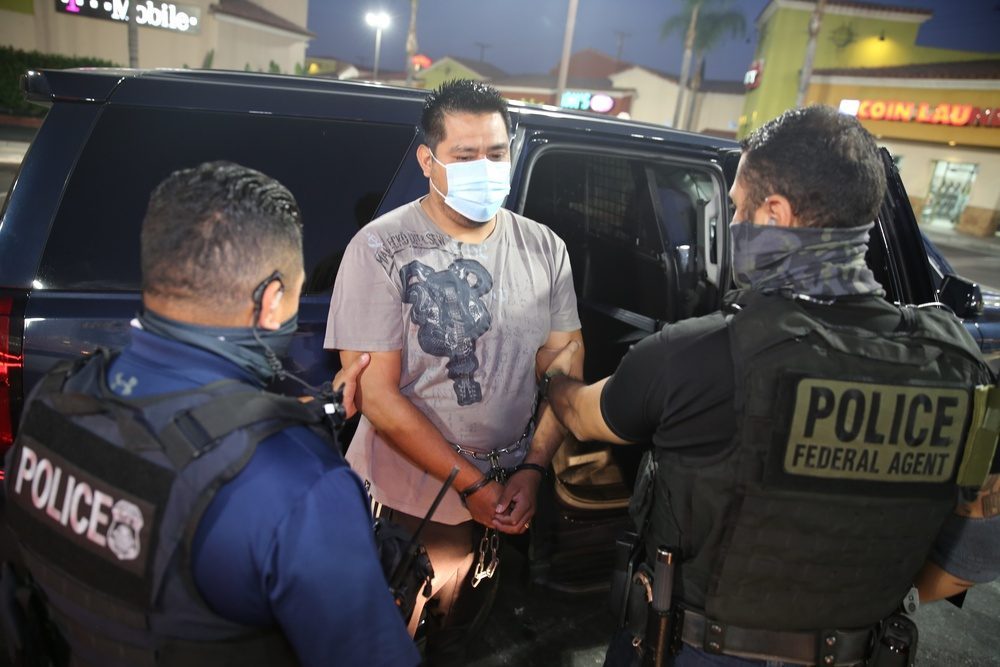
Summary: Green card holder ICE detention has reached unprecedented levels in 2025-2026, with lawful permanent residents being detained at airports, during traffic stops, and in their homes over old criminal convictions — some decades old — that previously never triggered enforcement action. The National Immigration Law Center warns that green card holders with any criminal history, political activism, or extended international travel face heightened risk of detention and deportation proceedings.
Green card holder ICE detention is no longer a rare event reserved for people convicted of serious crimes — it has become a widespread enforcement reality affecting lawful permanent residents across the United States. In 2025, the number of people in ICE detention rose nearly 75%, climbing from approximately 40,000 at the start of the year to a record 73,000 by mid-January 2026, according to the American Immigration Council. Among those swept up in this historic expansion are green card holders detained over decade-old misdemeanors, sealed marijuana charges, and minor fraud convictions that previously posed no threat to their immigration status. This article breaks down who is at risk, what your rights are, and how to protect yourself if you hold a green card in the current enforcement environment.
Critical warning: If you are a green card holder, do not sign Form I-407 if presented by CBP or ICE agents. Signing this form means voluntarily surrendering your lawful permanent resident status. You have the right to see an immigration judge. Consult an attorney before signing anything. Source: NILC.
The Scale of Green Card Holder ICE Detention in 2025-2026
The numbers paint a stark picture. According to analysis by the American Immigration Council, immigration detention is "bigger, harsher, and less accountable than ever." The Trump administration has put people with no criminal record into immigration detention at unprecedented levels — and green card holders are being caught in the net.
Research by Syracuse University professor Austin Kocher found that between September 21, 2025, and January 7, 2026, 92% of the growth in ICE detention was driven by people with no criminal convictions. Of the 11,296 increase in single-day ICE detentions during that period, only 902 were convicted criminals. The remaining 8,121 were classified as "other immigrant violators" — people with alleged civil immigration violations only.
By the end of November 2025, ICE was using 104 more facilities for immigration detention than at the start of the year — a 91% increase in detention infrastructure. More people died in ICE detention in 2025 than in the last four years combined, and the American Immigration Council reports that 2026 is on pace to be even worse. For the first time, thousands of immigrants arrested in the interior are being held in hastily constructed tent camps where conditions have been described as brutal.
Key statistic: The unprecedented growth of ICE detention has been fueled by $45 billion in funding included in the "One Big Beautiful Bill Act." The detention system is now on track to rival the entire federal criminal prison system by the end of President Trump's second term. Source: American Immigration Council.
Who Is Being Targeted? Risk Factors for Green Card Holders
The National Immigration Law Center (NILC) has identified several risk factors that make green card holders more likely to face ICE detention. Even if you have lived in the United States for decades, hold a steady job, and have deep community ties, the following factors can put you in the government's crosshairs:
Past Criminal Convictions — Even Old and Minor Ones
This is the single largest risk factor. Under current enforcement priorities, even old, minor, and fully resolved criminal convictions can trigger removal proceedings against a green card holder. The government classifies certain offenses as "crimes involving moral turpitude" or "aggravated felonies" under immigration law — categories that are far broader than they sound. A shoplifting conviction, a bad check, a minor drug possession charge, or a disorderly conduct citation from decades ago can now serve as the basis for green card holder ICE detention and deportation proceedings.
As NPR reported, immigration attorney Benjamin Osorio — who handled zero cases like this in 12 years of practice — has handled three or more since February 2025 alone. "We're in a maximum enforcement era now," Osorio told NPR. "The goal is to pick up as many people and charge as many people and put as many people in removal proceedings and ultimately deport as many people as possible."
International Travel
Green card holders who travel abroad are at heightened risk. CBP can stop returning green card holders at airports and ports of entry, send them to secondary inspection, and from there detain them and initiate deportation proceedings. This risk is especially acute if you have been outside the U.S. for more than 180 days, or if the government believes you "engaged in illegal activity" after leaving, according to NILC.
Political Activity and Free Speech
The Trump administration has used national security and terrorism-related provisions of immigration law — defined extremely broadly under federal statute — to target green card holders for their political activism. The Prism Reports documented multiple cases of permanent residents detained or facing deportation proceedings for engaging in constitutionally protected speech.
Extended Absence from the U.S.
Being outside the United States for more than six months at one time is another risk factor identified by NILC. When green card holders return after an extended absence, CBP may treat them as "seeking admission" rather than returning residents — which triggers different, more restrictive legal standards and gives the government greater authority to detain.
Real Cases: Green Card Holders Detained by ICE
The shift from policy to reality is best illustrated through the stories of real people who have experienced green card holder ICE detention firsthand. These cases, reported across major news outlets, demonstrate the breadth and sometimes seeming arbitrariness of current enforcement.
Donna Hughes-Brown — Detained Over a $25 Bad Check
Donna Hughes-Brown, an Irish national and lawful permanent resident, was detained at the Campbell County Detention Center in Northern Kentucky after returning from Ireland through Chicago's airport in July 2025. The reason? A bad check worth approximately $25 written a decade earlier, which ICE classified as a "crime of moral turpitude." As Fox 19 reported, Hughes-Brown had two fraud convictions related to passing bad checks — one in 2012 and another in 2015 — with both checks totaling under $60 combined. She had completed probation years ago.
"I'm here legally. Did I commit a crime many years ago? Yes. Did I pay for that crime years ago? Yes."
— Donna Hughes-Brown, speaking to Fox 19
Her husband Jim, a U.S. citizen and military veteran, expressed anguish that "the country he fought for would do this to someone who cares for others so much." The couple had been active in volunteer work, including Hurricane Helene relief efforts and tornado assistance in St. Louis.
Tae Heung "Will" Kim — Sealed Marijuana Charge from 2011
Tae Heung "Will" Kim, a Ph.D. student at Texas A&M University working on a Lyme disease vaccine, was detained at San Francisco International Airport in July 2025 after returning from his brother's wedding in South Korea. As reported by Prism Reports, the grounds for his detention was a minor 2011 marijuana possession charge in Texas — a charge that had been sealed from his public record. Previously, immigration officials had never pursued deportation proceedings on such minor, sealed offenses.
Lewelyn Dixon — 64-Year-Old Detained for a 2001 Conviction
Lewelyn Dixon, a 64-year-old Filipina permanent resident, was detained for nearly three months after being arrested at Seattle-Tacoma International Airport. According to NPR, her detention was based on a 2001 theft conviction from her employment, for which she served time in a halfway house and paid a $6,400 fine. Despite a clean record for over two decades and previous international trips without incident, she was pulled into ICE custody upon her return. An immigration judge ultimately allowed her to remain in the U.S. based on her record since the conviction.
Junior Dioses — 48 Days in ICE Custody Over Minor Offenses
Junior Dioses, a 39-year-old lawful permanent resident, was detained at a Texas airport in April 2025 upon returning from Peru. He spent two days at the airport and then 48 days in ICE custody in Conover, Texas. According to Prism Reports, federal authorities cited two past convictions — failing to stop for police in 2006 and disorderly conduct in 2019 — as justification, though immigration lawyers note that these violations don't legally justify removal under immigration law.
Mahmoud Khalil — Detained for Political Activism
Mahmoud Khalil, a Columbia University graduate and green card holder, was detained by immigration agents outside his home. Agents initially claimed his student visa had been revoked — though he did not have a student visa. When his wife showed agents his green card, they stated that was also being revoked. As NILC notes, immigration agents cannot revoke lawful permanent resident status — only immigration judges can do so after a formal court proceeding. Khalil's case was tied to his activism in support of Palestinian rights, and the government invoked a Cold War-era law allowing deportation if a noncitizen's presence could threaten U.S. foreign policy interests.

The DHS Enforcement Strategy: How the Government Is Finding Green Card Holders
The Trump administration has deployed a range of tools and strategies to identify and detain green card holders for removal proceedings. According to NILC and Prism Reports, these include:
- Data-matching technology and interagency databases: DHS and ICE use automated systems to cross-reference criminal records, immigration files, and travel data. Old immigration files that were previously closed or overlooked are being reopened.
- Social media monitoring: The Trump administration has warned green card holders that the government is monitoring social media accounts for political activity, statements, and associations.
- Airport and port-of-entry screening: CBP agents at airports have broad discretion to detain travelers for hours. Between April and June 2025, CBP searched 14,899 electronic devices — a 16.7% increase over the previous record, according to Prism Reports.
- Removal of sensitive location protections: In 2025, ICE eliminated its longstanding policy of avoiding enforcement actions at schools, churches, and hospitals, meaning green card holders can now be detained anywhere.
- Form I-407 pressure: CBP agents at airports have been pressuring detained green card holders to sign Form I-407, which constitutes voluntary abandonment of lawful permanent resident status. NILC warns that agents may tell detainees they can "get out of detention" by signing — but the result is permanent loss of their green card.
Your Legal Rights as a Green Card Holder in ICE Detention
If you are a green card holder facing ICE detention, you have specific constitutional and statutory rights. The Legal Aid Society of New York and NILC outline the following protections:
Right to Remain Silent
You have the right to remain silent and are not obligated to answer questions from immigration officials. This applies regardless of whether you are speaking with local police, CBP agents, or ICE officers. You do not have to answer questions about your country of birth, your immigration status, how you entered the United States, your political or religious beliefs, or your past activities.
Right to Refuse Consent
You do not have to sign any documents or grant permission for officials to enter your home unless they present a judicial warrant signed by a judge. An ICE deportation warrant (administrative warrant) is not a search warrant and does not authorize agents to enter your home without your consent.
Right to See an Immigration Judge
Green card holders have the right to appear before an immigration judge before their status can be revoked. Do not agree to "voluntary departure" or sign Form I-407 without consulting an attorney. ICE agents and CBP officers cannot revoke your green card — only an immigration judge can do that through a formal court proceeding.
Right to an Attorney
You have the right to hire an attorney to represent you in immigration proceedings. While the government is not required to provide a free attorney in immigration cases, many legal aid organizations provide pro bono representation. If you are detained, ask to make a phone call to your attorney or a legal aid organization immediately.
Right to Refuse Phone and Device Searches
According to the Legal Aid Society, you can refuse to unlock or provide access to your phone. Disable Face ID and biometric features before any travel or potential encounter. Keep important documents in secure cloud storage rather than on your device.
Emergency legal help: If you or a family member are detained, call The Legal Aid Society at 212-577-3300 or contact the National Immigration Law Center for guidance. Memorize these numbers — do not rely solely on your phone.
How to Protect Yourself: A Safety Plan for Green Card Holders
Based on guidance from NILC, the Legal Aid Society, and immigration attorneys interviewed by NPR, here are the steps every green card holder should consider:
- Consult an immigration attorney now. Do not wait until you are detained. If you have any criminal history — no matter how old or minor — get a legal assessment of your risk before traveling or having any interaction with law enforcement.
- Reconsider international travel. Immigration attorney Michael Cataliotti told NPR: "The safest thing, obviously, unfortunately, is to not travel." If you must travel, consult your attorney beforehand and carry documentation of your residence, employment, family ties, and community involvement.
- Carry your green card at all times. The Legal Aid Society recommends carrying your Lawful Permanent Resident card along with both paper and digital copies.
- Prepare your phone. Disable Face ID and biometric unlock features. Store important documents in secure cloud storage. Memorize your attorney's phone number and at least one emergency contact.
- Do not carry fraudulent documents. Carrying false documents or items that could be used against you will severely damage your case.
- Establish a power of attorney. If you have children who are U.S. citizens, designate a trusted person who can care for them if you are detained.
- Know the signs of ICE activity. Use tools like ICE Spotted's real-time map to stay informed about enforcement operations in your area. Read our guide on how to identify ICE vehicles and agents.
- Do not open your door. ICE agents cannot enter your home without a judicial warrant signed by a judge or your consent. Read our full guide: What to Do If ICE Comes to Your Door.
Community Response and Online Discussion
The surge in green card holder ICE detention has generated intense discussion across social media and online communities. On Reddit, threads in communities like r/immigration, r/legaladvice, and r/greencard have seen green card holders sharing experiences, warning each other about airport encounters, and debating whether to cancel international travel plans. The collective anxiety is palpable — many users with decades of clean records report fear of traveling abroad for the first time in their lives.
Immigration attorney Ann Garcia of the National Immigration Project told Prism Reports that she has seen increased anxiety among permanent residents who "wouldn't have worried a year ago." The Legal Aid Society's Ria Thompson-Washington added: "There's no way to tell who's going to be targeted when returning" to the country.
Community organizations across the country have responded by organizing know-your-rights workshops, establishing rapid-response legal hotlines, and building community alert networks. The Immigrant Defense Project maintains an ICE raids tactics map, and organizations like the NILC have published detailed guidance specifically for green card holders navigating the current enforcement landscape.
The Legal Landscape: What Immigration Law Actually Says
Understanding the legal framework behind green card holder ICE detention is essential for protecting yourself. Under the Immigration and Nationality Act (INA), lawful permanent residents can be placed in removal proceedings for several categories of offenses:
Crimes Involving Moral Turpitude (CIMT)
This is the broadest and most frequently cited category. "Moral turpitude" is defined as a "depraved or immoral act, or violation of duties owed to others" — a definition that courts have interpreted to include fraud, theft, assault, and many other offenses. As the Hughes-Brown case demonstrates, even a $25 bad check can be classified as a CIMT and trigger removal proceedings.
Aggravated Felonies
Under immigration law, the definition of "aggravated felony" is far broader than in criminal law. Offenses that are misdemeanors under state law — including some theft, fraud, and drug offenses — can be classified as "aggravated felonies" for immigration purposes, carrying mandatory detention and near-automatic deportation.
Controlled Substance Offenses
Any drug conviction — including simple possession of marijuana in states where it is now legal — can trigger removal proceedings. The Kim case illustrates this: a sealed, minor marijuana possession charge from 2011 was sufficient to detain a Ph.D. student and green card holder at an airport.
National Security and Terrorism Grounds
The government can detain and attempt to deport green card holders by claiming they are a danger to national security or involved in "terrorist activities," defined very broadly under federal law. As the Khalil case shows, this provision has been used against green card holders engaged in political activism that the government disagrees with.
What Happens After Detention: The Bond Hearing Crisis
For green card holders who are detained by ICE, the path to release has become significantly more difficult. On September 5, 2025, a federal immigration court ruled that undocumented immigrants living in the U.S. are ineligible to be released on bond — a decision that, while technically applying to undocumented individuals, has created a chilling effect across the entire detention system.
The American Immigration Council reports that as of November 2025, 14.3 people were deported directly from detention for every one person released pending a hearing. The Trump administration is pursuing policies that strip millions of people of the right to a bond hearing, including those with decades of life in the United States. For green card holders, this means that even if you have strong legal arguments against deportation, you may spend months in detention before you get the chance to make them.
How to Report ICE Activity in Your Area
If you witness ICE activity targeting green card holders or anyone else in your community, reporting it helps keep everyone informed and prepared. ICE Spotted provides a real-time activity map and anonymous reporting system that requires no login and collects no personal data. Your report can alert neighbors, local organizations, and legal aid providers who can mobilize to help.
For a detailed guide on safe, anonymous reporting, read: How to Report ICE Activity Anonymously and Safely.